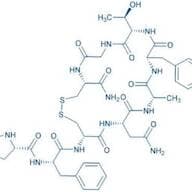
CAS 107090-96-0
:Crustacean Cardioactive Peptide
Description:
Crustacean Cardioactive Peptide (CCAP) is a neuropeptide originally isolated from the nervous system of crustaceans, particularly known for its role in modulating cardiac function. It is characterized by a relatively small peptide structure, typically consisting of around 30 amino acids, which contributes to its biological activity. CCAP is recognized for its ability to influence heart rate and contraction strength in crustaceans, acting as a potent cardioactive agent. The peptide is also involved in various physiological processes, including the regulation of locomotion and feeding behaviors. Its mechanism of action primarily involves interaction with specific receptors, leading to alterations in intracellular signaling pathways. CCAP has garnered interest in both neurobiology and pharmacology due to its potential applications in understanding cardiac function and developing therapeutic agents. The CAS number 107090-96-0 uniquely identifies this peptide in chemical databases, facilitating research and study in various scientific fields. Overall, CCAP exemplifies the intricate relationship between neuropeptides and physiological regulation in crustaceans.
Formula:C42H57N11O11S2
Synonyms:- H-Pro-Phe-Cys-Asn-Ala-Phe-Thr-Gly-Cys-NH2 (Disulfide bond)
- Ccap
Sort by
Purity (%)
0
100
|
0
|
50
|
90
|
95
|
100
Found 2 products.
Crustacean Cardioactive Peptide
CAS:Crustacean Cardioactive Peptide H-Pro-Phe-Cys-Asn-Ala-Phe-Thr-Gly-Cys-NH2 (Disulfide bond) is a peptide that has been shown to have cardiac and locomotor activity. It also has receptor activity, which is likely due to the presence of an alpha helix in the structure. Crustacean Cardioactive Peptide H-Pro-Phe-Cys-Asn-Ala-Phe-Thr-Gly-Cys (Disulfide bond) has been shown to inhibit voltage dependent calcium channels and stimulate ryanodine receptors. This peptide has been used as a model system for studying heart function, including its effects on cardiac muscle cells, neurons, and biochemical properties.Formula:C42H57N11O11S2Purity:Min. 95%Molecular weight:956.1 g/molCrustacean Cardioactive Peptide
CAS:Native and synthetic CCAP displayed high ino- and chronotropic effects on a semi-isolated crab heart preparation.Formula:C42H57N11O11S2Color and Shape:White PowderMolecular weight:956.11