CAS 107208-63-9
:asp-asp-asp
Description:
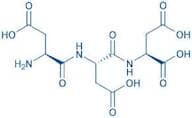
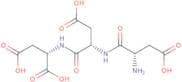
The chemical substance referred to as "asp-asp-asp" with the CAS number 107208-63-9 is known as a tripeptide composed of three aspartic acid residues. Aspartic acid is an amino acid that plays a crucial role in various biological processes, including protein synthesis and neurotransmission. This tripeptide exhibits characteristics typical of aspartic acid, such as being polar and negatively charged at physiological pH due to the presence of carboxyl groups. It is soluble in water and can participate in various biochemical reactions, including enzyme catalysis and metabolic pathways. The sequence of aspartic acid residues may influence its biological activity, stability, and interactions with other molecules. Additionally, this compound may be of interest in research related to peptide synthesis, drug design, and the study of protein structure and function. Its properties and potential applications make it a subject of interest in biochemistry and molecular biology.
Formula:C12H17N3O10
Synonyms:- H-Asp-Asp-Asp-OH
- L-Aspartic acid, L-α-aspartyl-L-α-aspartyl-
- triaspartic acid
Sort by
Purity (%)
0
100
|
0
|
50
|
90
|
95
|
100
Found 2 products.
H-Asp-Asp-Asp-OH
CAS:Triaspartic acid.Formula:C12H17N3O10Purity:> 98%Color and Shape:White PowderMolecular weight:363.28H-Asp-Asp-Asp-OH
CAS:H-Asp-Asp-Asp-OH is a peptide that has been shown to disrupt the cytosol and cause apoptosis. It can also induce proteolytic maturation and modulate autocatalytic functions. H-Asp-Asp-Asp-OH induces apoptosis by activating caspase 9 and caspase 3, which cleaves poly (ADP ribose) polymerase (PARP). This leads to DNA fragmentation, chromatin condensation, nuclear fragmentation, cell shrinkage, membrane blebbing, and nuclear pyknosis. H-Asp-Asp-Asp-OH binds to the regulatory domain of caspase 9 and prevents it from being activated. The peptide also activates caspase 8 by binding to its regulatory domain, which then activates caspases 3 and 7. H-Asp-Asp-Asp-OH also stimulates the release of granzyme B from cytot
Formula:C12H17N3O10Purity:Min. 95%Molecular weight:363.28 g/molRef: 3D-FA110342
Discontinued product