CAS 1075-77-0
:p-Chlorocinnamaldehyde
Description:
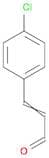
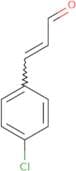
p-Chlorocinnamaldehyde, with the CAS number 1075-77-0, is an organic compound characterized by its aromatic structure and functional groups. It features a chlorinated phenyl group attached to a trans-alkene chain, culminating in an aldehyde functional group. This compound typically appears as a yellow to brownish liquid or solid, depending on its purity and temperature. It is known for its distinctive aromatic odor, which is reminiscent of cinnamon, and is often used in the synthesis of various organic compounds and as a flavoring agent in the food industry. p-Chlorocinnamaldehyde exhibits moderate solubility in organic solvents, such as ethanol and ether, but is less soluble in water due to its hydrophobic nature. Additionally, it possesses some biological activity, making it of interest in medicinal chemistry for potential applications in pharmaceuticals. Safety precautions are necessary when handling this compound, as it may cause irritation to the skin and eyes. Overall, p-Chlorocinnamaldehyde is a versatile compound with applications in both industrial and research settings.
Formula:C9H7ClO
InChI:InChI=1/C9H7ClO/c10-9-5-3-8(4-6-9)2-1-7-11/h1-7H/b2-1+
Synonyms:- (E)-3-(4-Chlorophenyl)-2-propenal
- (2E)-3-(4-Chlorophenyl)prop-2-enal
- (2E)-3-(4-Chlorophenyl)acrylaldehyde
- (2E)-3-(4-Chlorphenyl)prop-2-enal
- 2-propenal, 3-(4-chlorophenyl)-, (2E)-
- 4-Chlorocinnamaldehyde
Sort by
Purity (%)
0
100
|
0
|
50
|
90
|
95
|
100
Found 2 products.
3-(4-Chlorophenyl)acrylaldehyde
CAS:Acrylaldehyde is a reactive compound that can bind to the enzyme tyrosinase, inhibiting its activity. 3-(4-Chlorophenyl)acrylaldehyde (3-CA) is a small molecule that has shown an inhibitory effect on the proliferation of leukemia cells in vitro and in vivo. It also has broad-spectrum antimicrobial activity against Gram-positive and Gram-negative bacteria, including methicillin-resistant Staphylococcus aureus (MRSA). Tyrosine kinases are enzymes that catalyze the transfer of phosphate groups from ATP to tyrosine residues in proteins, leading to cellular signaling and cell division. 3-(4-Chlorophenyl)acrylaldehyde binds to tyrosine kinases and inhibits their function, which may be responsible for its cytotoxic effects.
Formula:C9H7ClOPurity:Min. 95%Molecular weight:166.6 g/mol