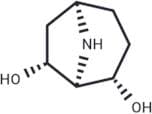
CAS 107633-95-4
:erycibelline
Description:
Erycibelline, with the CAS number 107633-95-4, is a chemical compound that belongs to the class of alkaloids. It is primarily known for its biological activity, particularly in the context of its potential therapeutic applications. Erycibelline exhibits a complex molecular structure, which contributes to its unique pharmacological properties. The compound has been studied for its effects on various biological systems, including its potential role in modulating neurotransmitter activity and influencing cellular signaling pathways. Its solubility characteristics and stability under different conditions are important for its application in research and potential medicinal use. As with many alkaloids, erycibelline may also exhibit toxicity at certain concentrations, necessitating careful handling and dosage considerations in experimental settings. Overall, the study of erycibelline contributes to the broader understanding of natural products and their potential utility in drug development and therapeutic interventions.
Formula:C7H13NO2
InChI:InChI=1/C7H13NO2/c9-5-2-1-4-3-6(10)7(5)8-4/h4-10H,1-3H2
SMILES:C1CC(C2C(CC1N2)O)O
Synonyms:- (Exo,exo)-(-)-8-azabicyclo(3.2.1)octane-2,7-diol
- 2,7-Dihydroxynortropane
- 8-Azabicyclo(3.2.1)octane-2,7-diol, (exo,exo)-(-)-
- 8-Azabicyclo[3.2.1]Octane-2,7-Diol
Sort by
Purity (%)
0
100
|
0
|
50
|
90
|
95
|
100
Found 2 products.
Erycibelline
CAS:Erycibelline has antiobesity activity, it may be a useful therapeutic agent for body weight control by downregulating adipogenesis and lipogenesis.Formula:C7H13NO2Purity:98%Color and Shape:SolidMolecular weight:143.18Erycibelline
CAS:Erycibelline is an alkaloid compound, which is a natural product extracted from the plant family Convolvulaceae. The source of Erycibelline involves plant tissues where it is biosynthesized through metabolic pathways involving amino acid derivatives. Its mode of action primarily includes modulating neurotransmitter pathways to elicit neuroprotective effects. Erycibelline exerts its effects by influencing neuronal signaling and potentially reducing oxidative stress in neural tissues.
Formula:C7H13NO2Purity:Min. 95%Molecular weight:143.18 g/molRef: 3D-HEA63395
Discontinued product