CAS 1078-61-1
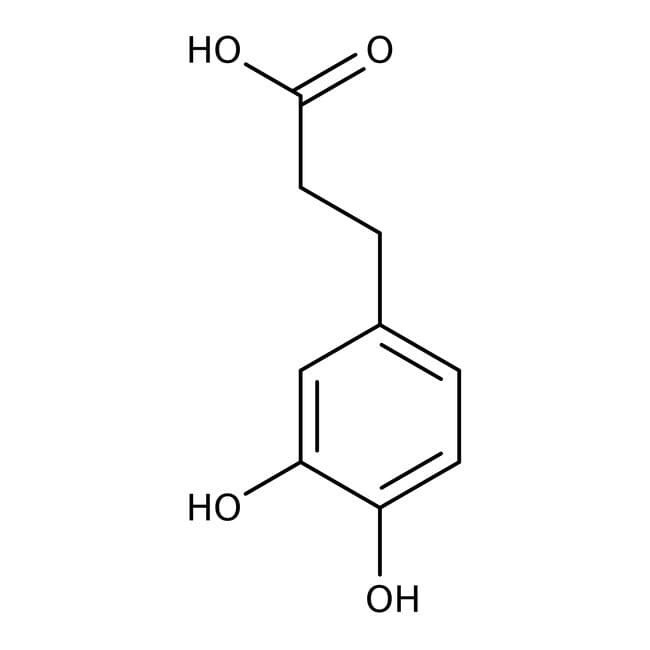
:Dihydrocaffeic acid
Description:
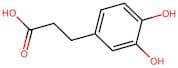
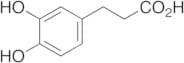
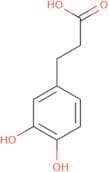
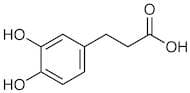
Dihydrocaffeic acid, with the CAS number 1078-61-1, is a phenolic compound that is structurally related to caffeic acid. It is characterized by its two hydroxyl groups and a double bond in the aromatic ring, which contribute to its antioxidant properties. This compound is typically found in various plant sources and is known for its potential health benefits, including anti-inflammatory and neuroprotective effects. Dihydrocaffeic acid is soluble in polar solvents, which facilitates its extraction from plant materials. Its chemical structure allows it to participate in various biochemical reactions, making it of interest in both nutritional and pharmaceutical research. Additionally, it may play a role in the metabolism of other phenolic compounds and contribute to the overall health benefits associated with diets rich in fruits and vegetables. As research continues, the full range of its biological activities and potential applications in health and medicine are being explored.
Formula:C9H10O4
InChI:InChI=1S/C9H10O4/c10-7-3-1-6(5-8(7)11)2-4-9(12)13/h1,3,5,10-11H,2,4H2,(H,12,13)
InChI key:InChIKey=DZAUWHJDUNRCTF-UHFFFAOYSA-N
SMILES:C(CC(O)=O)C1=CC(O)=C(O)C=C1
Synonyms:- 3,4-Dihydroxy-β-phenylpropionic acid
- 3,4-Dihydroxybenzenepropanoic acid
- 3,4-Dihydroxybenzenepropionic acid
- 3,4-Dihydroxydihydrocinnamic acid
- 3,4-Dihydroxyhydrocinnamic acid
- 3-(3,4-Dihydroxyphenyl)Propanoate
- 3-(3,4-Dihydroxyphenyl)Propanoic Acid
- 3-(3,4-Dihydroxyphenyl)propionic acid
- Benzenepropanoic acid, 3,4-dihydroxy-
- Dihydrocaffeic acid
- Hydrocaffeic acid
- Hydrocinnamic acid, 3,4-dihydroxy-
- NSC 407275
- NSC 624007
- See more synonyms
Sort by
Purity (%)
0
100
|
0
|
50
|
90
|
95
|
100
Found 10 products.
3-(3,4-Dihydroxyphenyl)propionic acid, 98+%
CAS:3-(3,4-Dihydroxyphenyl)propionic acid it can be used to produce 3-(3,4-dihydroxy-phenyl)-propionic acid octyl ester by heating. This Thermo Scientific Chemicals brand product was originally part of the Alfa Aesar product portfolio. Some documentation and label information may refer to the legacy braFormula:C9H10O4Purity:98+%Color and Shape:Pale cream to cream to brown or pale pink, Crystals or powder or crystalline powderMolecular weight:182.18Dihydrocaffeic acid
CAS:Dihydrocaffeic acid analytical standard provided with w/w absolute assay, to be used for quantitative titration.Formula:C9H10O4Purity:(HPLC) ≥98%Color and Shape:PowderMolecular weight:182.183-(3,4-Dihydroxyphenyl)propanoic acid
CAS:Formula:C9H10O4Purity:98%Color and Shape:SolidMolecular weight:182.1733Dihydrocaffeic acid
CAS:Dihydrocaffeic acid, a chlorogenic acid metabolite, has antioxidant, anti-Alzheimer's, neuroprotective, and lipid-lowering properties.Formula:C9H10O4Purity:98.63%Color and Shape:SolidMolecular weight:182.173-(3,4-Dihydroxyphenyl)Propionic Acid
CAS:3-(3,4-Dihydroxyphenyl)Propionic AcidPurity:98%Molecular weight:182.18g/mol3-(3,4-Dihydroxyphenyl)propionic acid
CAS:3-(3,4-Dihydroxyphenyl)propionic acid (3,4-DHPA) is a chlorogenic acid that is found in the leaves of the coffee plant. It has been shown to have a synergic effect with benzalkonium chloride on postprandial blood glucose levels. 3,4-DHPA also has a hypoglycemic effect and can be used as a dietary supplement for people with diabetes. 3,4-DHPA was extracted from coffee leaves using solid phase microextraction and then analyzed by gas chromatography. The rate constant for the reaction was found to be 0.917 min-1 at 25 °C and pH 7.0. The biocompatible polymer poly(L-lactic acid) was used as the stationary phase in this experiment to improve the selectivity of separation.Formula:C9H10O4Purity:Min. 95%Color and Shape:Off-White PowderMolecular weight:182.17 g/mol3-(3,4-Dihydroxyphenyl)propionic acid
CAS:Formula:C9H10O4Purity:95%Color and Shape:No data available.Molecular weight:182.1753,4-Dihydroxyhydrocinnamic Acid
CAS:Formula:C9H10O4Purity:>98.0%(GC)(T)Color and Shape:White to Brown powder to crystalMolecular weight:182.18