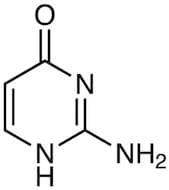
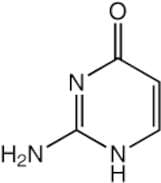
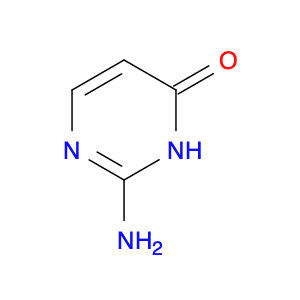
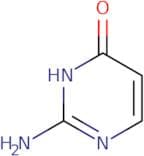
CAS 108-53-2
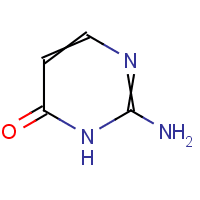
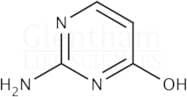
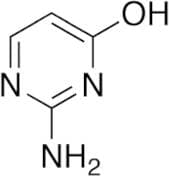
:isocytosine
- 2-Amino-1,4-dihydropyrimidin-4-one
- 2-Amino-1H-pyrimidin-4-one
- 2-Amino-1H-pyrimidin-6-one
- 2-Amino-3,4-Dihydropyrimidin-4-One
- 2-Amino-4(1H)-pyrimidinone
- 2-Amino-4-Hydroxypyrimidine
- 2-Amino-4-pyrimidinol
- 2-Amino-4-pyrimidone
- 2-Amino-6-hydroxypyrimidine
- 2-Aminouracil
- 2-aminopyrimidin-4(3H)-one
- 4(1H)-Pyrimidinone, 2-amino-
- NSC 49118
- Isocytosine
- 2-Aminopyrimidine-4(1H)-one
- 2-Aminopyrimidin-4-ol
- 2-AMINO-4-HYDROXYPYRIMIDINE 97%
- 2-Amino-6-hydroxpyrimidine
- 4(1H)-Pyrimidinone, 2-amino-(9CI)
- 2-AMINO-4-HYDROXYPYRIMIDINE/ISOCYTOSINE
- 4-HYDROXY-2-AMINOPYRIMIDINE
- 2-Aminopyrimidine-4(3H)-one
- 2-Amino-1,4-dihydropyrimidine-4-one
- 2-AMINO-4(3H)-PYRIMIDONE 97%
- 4-HYDROXY-2-AMINOPYRIMIDINE 97%
- 2-amino-4-hydroxypyrimine
- See more synonyms
Isocytosine
CAS:Formula:C4H5N3OPurity:>98.0%(T)(HPLC)Color and Shape:White to Light yellow powder to crystalMolecular weight:111.10Isocytosine, 99%
CAS:Isocytosine (2-aminouracil) is an isomer of cytosine used in physical chemical studies involving metal complex binding, hydrogen-bonding, and tautomerism and proton transfer effects in nucleobases. This Thermo Scientific Chemicals brand product was originally part of the Alfa Aesar product portfolioFormula:C4H5N3OPurity:99%Molecular weight:111.102-AMinopyriMidin-4(1H)-one
CAS:Formula:C4H5N3OPurity:95%Color and Shape:SolidMolecular weight:111.1020Isocytosine
CAS:Compound PDK0016, with CAS No. 108-53-2, is a fragment molecule that serves as an important scaffold for molecular linking, expansion, and modification. Compound PDK0016 provides a structural basis and research tool for the design and screening of novel drug candidates, and is commonly used in drug discovery, drug synthesis, and related research.Formula:C4H5N3OColor and Shape:White To Off-White SolidMolecular weight:111.1Isocytosine
CAS:Formula:C4H5N3OPurity:≥ 98.0% (dried basis)Color and Shape:White to off-white powderMolecular weight:111.10Iso Cytosine
CAS:Controlled ProductApplications A useful intermediate for chemical modifications of base and sugar moieties in natural nucleosides.
References Sashaki, T., et al.: J. Org. Chem., 40(1), 106 (1975)Formula:C4H5N3OColor and Shape:NeatMolecular weight:111.1Isocytosine
CAS:Isocytosine is a prodrug that has been synthesized with the intramolecular hydrogen on the nitrogen atoms, which makes it more chemically stable. Isocytosine is a reactive molecule, and can react with tautomers to form isocytosine derivatives. Isocytosine contains three hydrogen atoms that are transferable through reactions to other molecules. The chemical stability of isocytosine allows for its use in wastewater treatment. It also has metabolic effects, such as the inhibition of colorectal adenocarcinoma and metabolic disorders. Isocytosine can be used as a model system for studying transfer reactions and reaction mechanisms.
Formula:C4H5N3OPurity:Min. 95%Color and Shape:PowderMolecular weight:111.1 g/mol