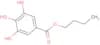
CAS 1083-41-6
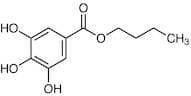
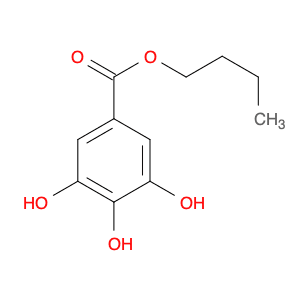
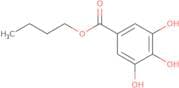
:Butyl gallate
Description:
Butyl gallate is an organic compound classified as an ester, specifically the butyl ester of gallic acid. It is commonly used as an antioxidant in food and cosmetic products due to its ability to inhibit the oxidation of fats and oils, thereby extending shelf life and maintaining product quality. The substance appears as a white to pale yellow crystalline powder and is soluble in organic solvents such as ethanol and acetone, but has limited solubility in water. Butyl gallate is known for its stability under various conditions, making it a preferred choice in formulations requiring long-term preservation. Its chemical structure includes a gallate moiety, which contributes to its antioxidant properties. While generally recognized as safe in regulated amounts, it is important to monitor its usage levels in consumer products to avoid potential adverse effects. Overall, butyl gallate serves as a valuable additive in various industries, particularly in food technology and cosmetics, due to its protective qualities against oxidative degradation.
Formula:C11H14O5
InChI:InChI=1S/C11H14O5/c1-2-3-4-16-11(15)7-5-8(12)10(14)9(13)6-7/h5-6,12-14H,2-4H2,1H3
InChI key:InChIKey=XOPOEBVTQYAOSV-UHFFFAOYSA-N
SMILES:C(OCCCC)(=O)C1=CC(O)=C(O)C(O)=C1
Synonyms:- Benzoic acid, 3,4,5-trihydroxy-, butyl ester
- Butyl gallate
- Gallic acid, butyl ester
- NSC 33956
- Progallin butyl
- Butyl 3,4,5-trihydroxybenzoate
Sort by
Purity (%)
0
100
|
0
|
50
|
90
|
95
|
100
Found 4 products.
Butyl Gallate
CAS:Formula:C11H14O5Purity:>98.0%(GC)(T)Color and Shape:White to Almost white powder to crystalMolecular weight:226.23n-Butyl gallate - 92%
CAS:n-Butyl gallate is an antioxidant that is used in the preservation of animal and plant tissues. It has been shown to form stable complexes with methyl groups, which are produced by human serum esterases and glycol ethers. n-Butyl gallate also reacts with metal ions, forming surface methodology models for metals that have not been characterized. This antioxidant prevents oxidation of the hydroxyl group in protocatechuic acid, which is a precursor of catecholamines.Formula:C11H14O5Purity:(%) Min. 92%Color and Shape:PowderMolecular weight:226.23 g/mol