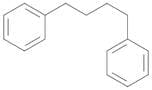
![1,1′-(1,4-Butanediyl)bis[benzene]](/_next/image/?url=https%3A%2Fstatic.cymitquimica.com%2Fcas-image%2Fthumb-webp%2F51918-11-14-butanediyl-bis-benzene.webp&w=3840&q=75)
CAS 1083-56-3
:1,1′-(1,4-Butanediyl)bis[benzene]
- 1,1'-Butane-1,4-Diyldibenzene
- 1,1′-(1,4-Butanediyl)bis[benzene]
- 1,4-Diphenylbutene
- Benzene, 1,1'-(1,4-butanediyl)bis- (9CI)
- Benzene, 1,1′-(1,4-butanediyl)bis-
- Butane, 1,4-diphenyl-
- Butane, 1,4-diphenyl- (8CI)
- Nsc 403943
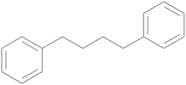
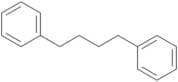
- 1,4-Diphenylbutane
1,4-Diphenylbutane
CAS:Applications 1,4-Diphenylbutane (cas# 1083-56-3) is a useful research chemical.
Formula:C16H18Color and Shape:NeatMolecular weight:210.311,4-Diphenylbutane
CAS:1,4-Diphenylbutane is a modified form of the natural amino acid phenylalanine. It is used as a synthetic receptor protein for the study of the reaction between receptors and ligands. The binding of 1,4-diphenylbutane to its receptor will inhibit blood clotting by inhibiting coagulation factors. The optimal reaction occurs at pH 7.5 and at 25 degrees Celsius. The amount of 1,4-diphenylbutane required for a desired level of inhibition will depend on the type of receptor and other factors, such as temperature and concentration. The functional groups in this compound are an aromatic ring (benzene) and two alkyl chains with one carbon each (propane). This molecule has two reactive sites that can be modified by adding additional molecules to create new compounds without changing its function. In addition, 1,4-diphenylbutane binds to red blood cells more strongly than it binds
Formula:C16H18Purity:Min. 95%Molecular weight:210.31 g/molRef: 3D-BAA08356
Discontinued product