CAS 1088-08-0
:2′,4′,6′-Trihydroxydihydrochalcone
Description:
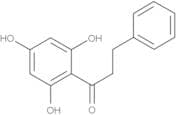
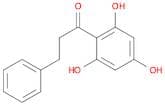
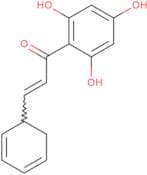
2′,4′,6′-Trihydroxydihydrochalcone, with the CAS number 1088-08-0, is a flavonoid compound characterized by its three hydroxyl groups located at the 2′, 4′, and 6′ positions of the aromatic ring. This compound is a derivative of dihydrochalcone, which is known for its sweetening properties and potential health benefits. It typically appears as a solid and is soluble in organic solvents, with limited solubility in water. The presence of multiple hydroxyl groups contributes to its antioxidant activity, making it of interest in various biological and pharmaceutical applications. Additionally, 2′,4′,6′-Trihydroxydihydrochalcone has been studied for its potential role in modulating metabolic pathways and its effects on cellular processes. Its structural features allow for interactions with various biological targets, which may lead to therapeutic implications. Overall, this compound exemplifies the diverse functionality of flavonoids in both natural and synthetic contexts.
Formula:C15H14O4
InChI:InChI=1S/C15H14O4/c16-11-8-13(18)15(14(19)9-11)12(17)7-6-10-4-2-1-3-5-10/h1-5,8-9,16,18-19H,6-7H2
InChI key:InChIKey=QWQGMMRHTWIOGH-UHFFFAOYSA-N
SMILES:C(CCC1=CC=CC=C1)(=O)C2=C(O)C=C(O)C=C2O
Synonyms:- 2′,4′,6′-Trihydroxyhydrochalcone
- 3-Phenyl-1-(2,4,6-trihydroxyphenyl)-1-propanone
- 1-Propanone, 3-phenyl-1-(2,4,6-trihydroxyphenyl)-
- Propiophenone, 2′,4′,6′-trihydroxy-3-phenyl-
- 2′,4′,6′-Trihydroxydihydrochalcone
Sort by
Purity (%)
0
100
|
0
|
50
|
90
|
95
|
100
Found 3 products.
Pinocembrin dihydrochalcone
CAS:Pinocembrin dihydrochalcone analytical standard provided with w/w absolute assay, to be used for quantitative titration.Formula:C15H14O4Purity:(HPLC) ≥98%Color and Shape:PowderMolecular weight:258.271-Propanone,3-phenyl-1-(2,4,6-trihydroxyphenyl)-
CAS:Formula:C15H14O4Purity:98.0%Color and Shape:SolidMolecular weight:258.26932',4',6'-Trihydroxydihydrochalcone
CAS:2',4',6'-Trihydroxydihydrochalcone is a sweetening agent, which is derived from the bioflavonoids found in citrus fruits, particularly naringin. Through a process of hydrogenation, the naringin is converted into the dihydrochalcone, which retains the sweet characteristics desirable in sugar substitutes.Formula:C15H14O4Purity:Min. 97 Area-%Color and Shape:PowderMolecular weight:258.27 g/mol