CAS 109-76-2
:1,3-Propanediamine
Description:
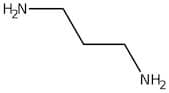
1,3-Propanediamine, also known as trimethylenediamine, is an organic compound characterized by its aliphatic amine structure, featuring two amine groups (-NH2) attached to a three-carbon chain. It is a colorless to pale yellow liquid with a strong amine odor and is hygroscopic, meaning it readily absorbs moisture from the air. This compound is soluble in water and polar organic solvents, making it versatile in various chemical applications. 1,3-Propanediamine is primarily used in the synthesis of polyamides, surfactants, and as a curing agent in epoxy resins. It exhibits basic properties due to the presence of amine groups, allowing it to participate in various chemical reactions, including nucleophilic substitutions and condensation reactions. Additionally, it can act as a ligand in coordination chemistry. However, it is important to handle this compound with care, as it can be irritating to the skin, eyes, and respiratory system. Proper safety measures should be taken when working with 1,3-propanediamine in laboratory or industrial settings.
Formula:C3H10N2
InChI:InChI=1S/C3H10N2/c4-2-1-3-5/h1-5H2
InChI key:InChIKey=XFNJVJPLKCPIBV-UHFFFAOYSA-N
SMILES:C(CN)CN
Synonyms:- 1,3-Diamino-n-propane
- 1,3-Diaminopropan
- 1,3-Propandiamine
- 1,3-Propane Diamine
- 1,3-Propanediamine
- 1,3-Propylenediamine
- 1,3-Trimethylenediamine
- 3-Aminopropylamine
- DAP
- Nsc 8154
- Propane, 1,3-Diamino-
- Propane-1,3-Diaminium
- Tmeda
- Trimethylendiamin
- Trimethylenediamine
- Trimetilendiamina
- α,ω-Propanediamine
- See more synonyms
Sort by
Purity (%)
0
100
|
0
|
50
|
90
|
95
|
100
Found 7 products.
1,3-Diaminopropane
CAS:Formula:C3H10N2Purity:>98.0%(GC)Color and Shape:Colorless to Almost colorless clear liquidMolecular weight:74.131,3-Diaminopropane, 98%
CAS:1,3-Diaminopropane is commonly used in the preparation of cholinesterase inhibitors and thrombosis inhibitors. It is also used as a polymer cross linkage agent, polyurethane extender and spray coatings. It is involved in the preparation of agrochemicals and pharmaceutical intermediates. Further, itFormula:C3H10N2Purity:98%Color and Shape:Liquid, Clear colorlessMolecular weight:74.131,3-Diaminopropane
CAS:1,3-DiaminopropaneFormula:C3H10N2Purity:95%Color and Shape:LiquidMolecular weight:74.131,3-Diaminopropane
CAS:Controlled ProductApplications 1,3-Diaminopropane is a common chemical reagent, used in the synthesis of 7-methoxytacrine-adamantylamine heterodimers as cholinesterase inhibitors applied in the treatment of Alzheimer’s disease. Also used in the synthesis of thrombosis inhibitors.
Not a dangerous good if item is equal to or less than 1g/ml and there is less than 100g/ml in the package
References Spilovska, K. et al.: Molecules, 18, 2397 (2013); Smith, S. et al.: Blood, 120, 5103 (2012);Formula:C3H10N2Color and Shape:NeatMolecular weight:74.121,3-Diaminopropane
CAS:1,3-Diaminopropane is a molecule that belongs to the group of organic compounds known as diamine. It is a colorless liquid with an unpleasant odor. 1,3-Diaminopropane has inhibitory properties and can be used in the treatment of squamous cell carcinoma and galleria mellonella. The mechanism of action for this compound has been determined by x-ray crystal structures. 1,3-Diaminopropane reacts with picolinic acid (PA) to form an intramolecular hydrogen bond, which inhibits PA's ability to react with other molecules. This results in PA being unable to form reactive intermediates that normally lead to cancerous changes in cells.Formula:C3H10N2Purity:Min. 95%Color and Shape:Clear LiquidMolecular weight:74.12 g/mol