CAS 110-17-8
:2-Butenedioic acid (2E)-
Description:
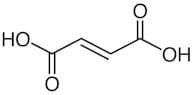
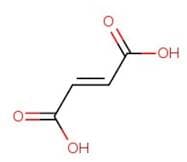
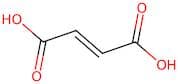
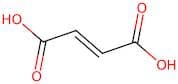
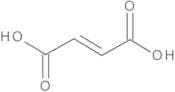
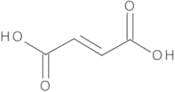
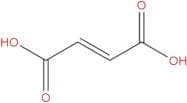
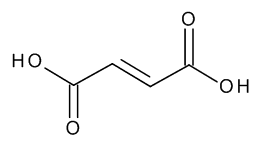
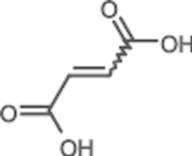
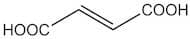
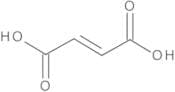
2-Butenedioic acid, commonly known as fumaric acid, is an organic compound with the molecular formula C4H4O4. It is a dicarboxylic acid characterized by the presence of two carboxylic acid groups (-COOH) attached to a four-carbon chain, with a double bond between the second and third carbon atoms. This compound exists in two geometric isomers: the trans (E) form, which is the more stable and prevalent isomer, and the cis (Z) form. Fumaric acid is a white crystalline solid that is soluble in water and has a slightly acidic taste. It is used in various applications, including food additives, pharmaceuticals, and as a precursor in the synthesis of other chemicals. Additionally, fumaric acid plays a role in the human metabolism, particularly in the citric acid cycle. Its derivatives are also studied for potential therapeutic effects in treating certain medical conditions, such as psoriasis. Overall, fumaric acid is an important compound in both industrial and biological contexts.
Formula:C4H4O4
InChI:InChI=1/C4H4O4/c5-3(6)1-2-4(7)8/h1-2H,(H,5,6)(H,7,8)/b2-1+
InChI key:InChIKey=VZCYOOQTPOCHFL-OWOJBTEDSA-N
SMILES:C(=C/C(O)=O)\C(O)=O
Synonyms:- (2E)-2-Butenedioic acid
- (2E)-But-2-enedioic acid
- (E)-2-Butenedioic acid
- 2-(E)-Butenedioic acid
- 2-Butenedioic acid (E)-
- 2-Butenedioic acid, 2-Butenedioic acid
- Acide fumarique
- Acido Fumarico
- Allomaleic acid
- Bakeshure 451
- Bakeshure 470
- Boletic acid
- C4H4O4
- FC 33 (acid)
- Fc 33
- Fumarates
- Fumaric Acid
- Fumarsaeure
- Fumarsaure
- Lichenic acid
- Nsc 2752
- Petrom
- Trans-Butenedioic Acid
- trans-1,2-Ethylenedicarboxylic acid
- trans-2-Butenedioic acid
- 2-Butenedioic acid (2E)-
- L-Fumaric Acid
- (e)-butenedioicaci
- (E)-HO2CCH=CHCO2H
- TRANS-BUTENEDICARBOXYLIC ACID
- TRANS-1,2-ETHYLENTRICARBOXYLIC ACID
- (e)-2-butenedioicaci
- FEMA 2488
- FA
- RARECHEM AL BO 0142
- 1,2-Ethenedicarboxylic acid, trans-
- 2-BUTENEDIOIC ACID
- (e)-1,2-ethenedicarboxylic acid
- ACIDUM FUMARICUM
- See more synonyms
Sort by
Purity (%)
0
100
|
0
|
50
|
90
|
95
|
100
Fumaric Acid
CAS:Formula:C4H4O4Purity:>99.0%(GC)(T)Color and Shape:White to Almost white powder to crystalMolecular weight:116.07Fumaric acid, 99%
CAS:Fumaric acid is used as a food additive and acid regulator. It is used in the production of polyester resins and polyhydric alcohols. It is also used as a mordant for dyes, paint additives, coating additives, plasticizers, processing aids and specific to petroleum production. Further, it is used inFormula:C4H4O4Purity:99%Color and Shape:White, Crystals or powder or crystalline powderMolecular weight:116.07Fumaric Acid
CAS:Fumaric acid (trans-butenedioic acid)Formula:C4H4O4Color and Shape:Colorless White Crystals Crystalline PowderMolecular weight:116.01096Fumaric acid
CAS:Formula:C4H4O4Purity:≥ 99.0%Color and Shape:White crystalline powder or crystalsMolecular weight:116.07Fumaric acid 1000 µg/mL in Acetonitrile:Water
CAS:Formula:C4H4O4Color and Shape:Single SolutionMolecular weight:116.07Fruit Juice Organic Acid Mixture 56 25-2000 µg/mL in Water
CAS:Controlled ProductFormula:C6H8O7Color and Shape:MixtureMolecular weight:192.12Fumaric acid
CAS:Fumaric acid reduces eotaxin-1 in TNF-α-activated fibroblasts via p38 MAPK/NF-κB. It's an oncometabolite found in high levels in tumors.Formula:C4H4O4Purity:98.77% - 98.80%Color and Shape:Colorless Needles Monoclinic Prisms Or Leaflets From Water Solid CrystallineMolecular weight:116.07Fumaric acid
CAS:Acyclic polybasic carboxylic acidFormula:C4H4O4Purity:≥ 98.0 % (HPLC)Color and Shape:PowderMolecular weight:116.07Fumaric acid
CAS:Formula:C4H4O4Purity:99.0%Color and Shape:Solid, Crystalline or PowderMolecular weight:116.072Fumaric Acid
CAS:Controlled ProductApplications Fumaric Acid is a compound that occurs in many plants. It is essential to vegetable and tissue respiration and also used as an antioxidant. Fumaric Acid is also a metabolite of Dimethyl Fumarate (D464965), a compound used as a treatment for the relapsing forms of multiple sclerosis and psoriasis.
References Jelitto, T., et al.: Planta, 188, 238 (1992); Schimrigk, S., et al.: Eur. J. Neurol., 13, 604 (2006); Son, H., et al.: J. Agric. Food Chem., 56, 8007 (2008);Formula:C4H4O4Color and Shape:NeatMolecular weight:116.07