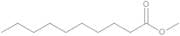
CAS 110-42-9
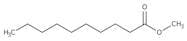
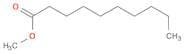
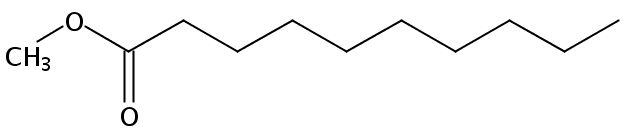
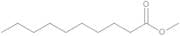
:Methyl decanoate
Description:
Methyl decanoate, with the CAS number 110-42-9, is an ester formed from the reaction of methanol and decanoic acid. It is characterized by its pleasant, fruity odor, which makes it useful in the flavor and fragrance industries. This compound is a colorless to pale yellow liquid at room temperature and has a relatively low boiling point, indicating it is volatile. Methyl decanoate is soluble in organic solvents such as ethanol and ether but has limited solubility in water due to its hydrophobic decanoate chain. It is commonly used as a solvent and in the synthesis of other chemical compounds. Additionally, it exhibits properties typical of esters, including being less dense than water and having a lower viscosity. Methyl decanoate is also recognized for its potential applications in biodiesel production and as a model compound in studies of lipid metabolism. Safety data indicates that it should be handled with care, as it can be an irritant to the skin and eyes.
Formula:C11H22O2
InChI:InChI=1S/C11H22O2/c1-3-4-5-6-7-8-9-10-11(12)13-2/h3-10H2,1-2H3
InChI key:InChIKey=YRHYCMZPEVDGFQ-UHFFFAOYSA-N
SMILES:C(CCCCCCCC)C(OC)=O
Synonyms:- C 1098
- Capric acid methyl ester
- Capric acid methyl ester~Decanoic acid methyl ester~Methyl decanoate
- Ce 1095
- Decanoate de methyle
- Decanoate, Methyl
- Decanoato De Metilo
- Decanoic acid methyl ester
- Estasol MD 10
- Metholene 2095
- Methyl caprinate
- Methyl decanoate
- Methyl n-caprate
- Methyl n-decanoate
- Methyldecanoat
- Methyle N-Caprinate
- Nsc 3713
- Pastell M 10
- Uniphat A 30
- See more synonyms
Sort by
Purity (%)
0
100
|
0
|
50
|
90
|
95
|
100
Found 14 products.
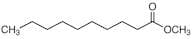
Methyl Decanoate
CAS:Formula:C11H22O2Purity:>98.0%(GC)Color and Shape:Colorless to Almost colorless clear liquidMolecular weight:186.30Methyl Decanoate [Standard Material for GC]
CAS:Formula:C11H22O2Purity:>99.5%(GC)Color and Shape:Colorless clear liquidMolecular weight:186.30Methyl decanoate, 98+%
CAS:It is employed as an intermediate for caproic acid, detergents, emulsifiers, wetting agents, stabilizers, resins, lubricants, plasticizers and flavoring. As a chemical intermediate for alkanolamides, fatty alcohols acids.This Thermo Scientific Chemicals brand product was originally part of the AlfaFormula:C11H22O2Purity:98+%Color and Shape:Liquid, Clear colorless to pale yellowMolecular weight:186.30Methyl Caprate
CAS:Saturated acyclic monocarboxylic acids and their anhydrides, halides, peroxides etc, nesoiFormula:C11H22O2Color and Shape:Clear Colorless LiquidMolecular weight:186.3Methyl decanoate
CAS:Methyl decanoate (capric acid methyl ester) is an ester compound commonly used as an intermediate in organic synthesisFormula:C11H22O2Purity:99.43%Color and Shape:SolidMolecular weight:186.29Methyl Decanoate(Methyl Caprate)
CAS:Applications Methyl Caprate, is an unsaturated biodiesel fuel surrogate. It can also be used as flavor and fragrance ingredients.
References Wang, W., et al.: Energy & Fuels, 27, 5527 (2013);Formula:C11H22O2Color and Shape:ColourlessMolecular weight:186.29Capric Acid Methyl Ester (Methyl Decanoate) extrapure, 99%
CAS:Formula:C11H22O2Purity:min. 99%Color and Shape:Clear, Colourless, LiquidMolecular weight:186.29Methyl Decanoate
CAS:Methyl decanoate is a fatty acid that is used in the production of glycol ethers. It is produced by combining anhydrous sodium decanoate in a laminar flow reactor with methyl alcohol and water vapor. The mixture is heated to 180 °C, which causes the release of methyl alcohol and water vapor. The reaction mechanism for this process involves the oxidation of methyl alcohol, which creates a reactive intermediate. In the presence of oxygen and light, this intermediate reacts with the methyl decanoate to form methyl myristate and caproic acid. This process can also be carried out under constant pressure without using any solvent or catalyst. Methyl decanoate has been shown to react with fluorescence probes such as 8-hydroxyquinoline (8HQ). This reaction leads to changes in the fluorescence intensity, which can be detected using a spectrophotometer at wavelengths between 420 nm and 500 nm.Formula:C11H22O2Purity:95%Min GcMolecular weight:186.3 g/mol

![Methyl Decanoate [Standard Material for GC]](/_next/image/?url=https%3A%2Fstatic.cymitquimica.com%2Fproducts%2F3B%2Fthumb%2FS0308.jpg&w=3840&q=75)