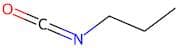
CAS 110-78-1
:Propyl isocyanate
Description:
Propyl isocyanate, with the CAS number 110-78-1, is an organic compound characterized by the presence of an isocyanate functional group (-N=C=O) attached to a propyl chain. It is a colorless to pale yellow liquid with a pungent odor, reminiscent of mustard or other strong chemicals. This compound is known for its reactivity, particularly in nucleophilic addition reactions, making it useful in the synthesis of various organic compounds, including pharmaceuticals and agrochemicals. Propyl isocyanate is moderately soluble in water and more soluble in organic solvents, which influences its applications in chemical synthesis. It is important to handle this substance with care, as it can be toxic and irritating to the skin, eyes, and respiratory system. Proper safety measures, including the use of personal protective equipment and adequate ventilation, are essential when working with propyl isocyanate. Additionally, it is classified as a hazardous material, necessitating adherence to regulations regarding its storage and disposal.
Formula:C4H7NO
InChI:InChI=1S/C4H7NO/c1-2-3-5-4-6/h2-3H2,1H3
InChI key:InChIKey=OQURWGJAWSLGQG-UHFFFAOYSA-N
SMILES:C(N=C=O)CC
Synonyms:- 1-Isocyanatopropane
- 1-Propyl isocyanate
- Isocianato De Propilo
- Isocyanate de propyle
- Isocyanic Acid n-Propyl Ester
- Isocyanic acid, propyl ester
- Isocyanocacidpropylester
- Nsc 89688
- Propane, 1-isocyanato-
- Propyl isocyanate
- Propylisocyanat
Sort by
Purity (%)
0
100
|
0
|
50
|
90
|
95
|
100
Found 2 products.
N-Propyl isocyanate
CAS:N-Propyl isocyanate is a reactive molecule that can be used as an antimicrobial agent. It has been shown to be effective against infectious diseases, such as chronic bronchitis and antibiotic-resistant strains of bacteria. N-propyl isocyanate has been shown to be a competitive inhibitor of bacterial enzymes and inactivates the enzyme’s active site. This inhibits the synthesis of DNA, RNA, and proteins that are necessary for bacterial replication. The addition of hydroxyl groups to the molecule allows for hydrogen bonding with other molecules, forming a reactive functional group. The molecule also has an electrochemical impedance spectroscopy (EIS) property that can be used to detect its presence in liquids. Kinetic data shows the reaction rate between N-propyl isocyanate and various bacteria.Formula:C4H7NOPurity:Min. 95%Molecular weight:85.1 g/mol