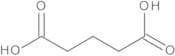
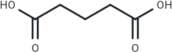
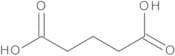
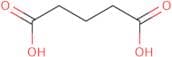
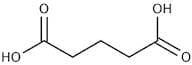
CAS 110-94-1
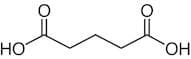
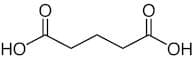
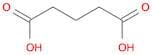
:Glutaric acid
- 1,3-Propanedicarboxylic acid
- 1,5-Pentanedioic acid
- Acide glutarique
- Acido Glutarico
- Glutaric Acid
- Glutarsaure
- Nsc 9238
- Pentanedioic acid
- pentanedioic acid
- Glutaric acid,(Pentanedioic acid
- 1,3-Propane-dicarboxylic acid)
- See more synonyms
Glutaric Acid (ca. 50% in Water, ca. 4.3mol/L)
CAS:Formula:C5H8O4Color and Shape:Colorless to Almost colorless clear liquidMolecular weight:132.12Glutaric Acid
CAS:Formula:C5H8O4Purity:>99.0%(GC)(T)Color and Shape:White to Almost white powder to crystalMolecular weight:132.12Glutaric acid, 99%
CAS:Glutaric acid is used as the raw material for organic synthesis, pharmaceutical intermediate and synthetic resin. It serves as a precursor in the production of polyester polyols, polyamides, ester plasticizers and corrosion inhibitors. It is useful to decrease polymer elasticity and in the synthesisFormula:C5H8O4Purity:99%Color and Shape:White to pale cream, Crystals or powder or crystalline powderMolecular weight:132.12Propane-1,3-dicarboxylic acid
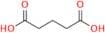
CAS:Propane-1,3-dicarboxylic acidFormula:C5H8O4Purity:99%Molecular weight:132.11462Glutaric acid
CAS:Formula:C5H8O4Purity:≥ 99.0%Color and Shape:White crystalline powder or crystalsMolecular weight:132.12Glutaric acid
CAS:Glutaric acid: five-carbon dicarboxylic acid, byproduct of lysine and tryptophan metabolism.Formula:C5H8O4Purity:98.83%Color and Shape:SolidMolecular weight:132.11Glutaric Acid
CAS:Applications Glutaric Acid is an organic acid found in human urine which may be used for the detection of metabolic or other health disorders.
References Christou, C., et. al.: J. Chromatogr. B. Anal. Tech. Biomed. Life Sci., 964, 195 (2014)Formula:C5H8O4Color and Shape:NeatMolecular weight:132.11Glutaric acid
CAS:Glutaric acid is a dinucleotide phosphate that exists in two forms: the alpha form, which has a high phase transition temperature and is insoluble in water; and the beta form, which has a low phase transition temperature and is soluble in water. Glutaric acid can be used as an analytical reagent to identify the type of nucleotides present in samples. It can also be used as an experimental solvent for other compounds that are not soluble in water. The toxicity of glutaric acid has been studied extensively and found to be low. This compound does not appear to have any adverse effects on human health or animals at doses up to 1g/kg body weight. Glutaric acid has been shown to have anti-infectious properties by inhibiting the growth of bacteria, fungi, and viruses. The effectiveness of glutaric acid against infectious diseases appears to depend on its ability to block protein synthesis by inhibiting enzymes such as glutathione reductase
Formula:C5H8O4Purity:Min. 99 Area-%Color and Shape:White PowderMolecular weight:132.11 g/molGlutaric Acid pure, 99%
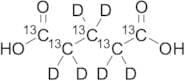
CAS:Formula:C5H8O4Purity:min. 99%Color and Shape:White, Crystalline powder, Clear, ColourlessMolecular weight:132.10Glutaric Acid-13C5, D6
CAS:Controlled ProductFormula:C5D6H2O4Color and Shape:NeatMolecular weight:143.115