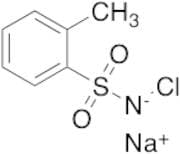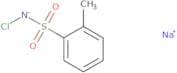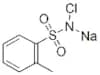
CAS 110076-44-3
:Chloramine
Description:
Chloramine, specifically the compound with the CAS number 110076-44-3, is a chemical substance that belongs to a class of compounds known as chloramines. It is typically formed by the reaction of ammonia with chlorine or chlorinated compounds. Chloramine is characterized by its use as a disinfectant and a water treatment agent, particularly in municipal water systems, where it serves as a more stable alternative to chlorine. It is less reactive than chlorine, which helps to reduce the formation of harmful by-products during water treatment. Chloramine is generally less toxic than chlorine, but it can still pose health risks at elevated concentrations. In terms of physical properties, chloramine is usually a pale yellow to colorless liquid with a distinct odor. It is soluble in water and can participate in various chemical reactions, including oxidation and substitution reactions. Proper handling and storage are essential due to its potential to form hazardous compounds under certain conditions.
Formula:C7H7ClNNaO2S
InChI:InChI=1/C7H7ClNO2S.Na/c1-6-4-2-3-5-7(6)12(10,11)9-8;/h2-5H,1H3;/q-1;+1/rC7H7ClNNaO2S/c1-6-4-2-3-5-7(6)13(11,12)9(8)10/h2-5H,1H3
SMILES:Cc1ccccc1S(=O)(=O)[N-]Cl.[Na]
Synonyms:- o-Chloramine T
Sort by
The purity filter is not visible because current products do not have associated purity data for filtering.
Found 3 products.
o-Chloramine T
CAS:Controlled ProductApplications o-Chloramine T (cas# 110076-44-3) is a useful research chemical.
Formula:C7H7ClNO2S·NaColor and Shape:NeatMolecular weight:227.644o-Chloramine T
CAS:O-Chloramine T is a chemical compound that is used in the treatment of cancer. It is an endoreduplication agent and has been shown to cause endothelial cell growth and apoptosis in cancer cells. O-Chloramine T binds to the membrane of cancer cells, which leads to a decrease in autocrine activity and cell binding. O-Chloramine T also inhibits endothelial cell growth by inhibiting protein synthesis and blocking the synthesis of DNA and RNA. This drug has been shown to have anti-cancer properties in animal models and hyperosmolarity properties, which may be due to its ability to cause vessels to collapse.
Formula:C7H7ClNNaO2SColor and Shape:PowderMolecular weight:227.64 g/molRef: 3D-FC60638
Discontinued product