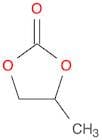
CAS 110320-40-6
:Poly(propylene carbonate)
Description:
Poly(propylene carbonate) (PPC) is a biodegradable polymer synthesized from carbon dioxide and propylene oxide, making it an environmentally friendly alternative to traditional plastics. It exhibits a glass transition temperature that allows it to maintain flexibility at room temperature, while its mechanical properties can vary based on molecular weight and processing conditions. PPC is characterized by its good thermal stability and resistance to moisture, which enhances its applicability in various fields, including packaging, coatings, and biomedical applications. The polymer is also known for its low toxicity and biocompatibility, making it suitable for use in medical devices and drug delivery systems. Additionally, PPC can be processed using conventional methods such as extrusion and injection molding, facilitating its integration into existing manufacturing processes. Its ability to degrade in natural environments further underscores its potential as a sustainable material, aligning with the growing demand for eco-friendly alternatives in the polymer industry.
Formula:(C4H6O3)x
InChI:InChI=1S/C4H6O3/c1-3-2-6-4(5)7-3/h3H,2H2,1H3
InChI key:InChIKey=RUOJZAUFBMNUDX-UHFFFAOYSA-N
SMILES:CC1OC(=O)OC1
Synonyms:- Poly(propylene carbonate)
- 4-Methyl-1,3-dioxolan-2-one homopolymer
- 1,2-Propylene carbonate homopolymer
- Propylene carbonate homopolymer
- 1,3-Dioxolan-2-one, 4-methyl-, homopolymer
Sort by
The purity filter is not visible because current products do not have associated purity data for filtering.
Found 1 products.