CAS 110464-72-7
:4-methoxy-3,5-dimethylpicolinaldehyde
Description:
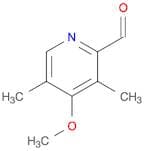
4-Methoxy-3,5-dimethylpicolinaldehyde, with the CAS number 110464-72-7, is an organic compound that belongs to the class of picolinaldehydes. It features a pyridine ring substituted with a methoxy group and two methyl groups, contributing to its unique chemical properties. The presence of the aldehyde functional group indicates that it can participate in various chemical reactions, such as nucleophilic addition and condensation reactions. This compound is typically characterized by its aromatic nature, which can influence its reactivity and interactions with other molecules. Its methoxy group enhances solubility in organic solvents and may also affect its electronic properties. Additionally, the steric hindrance introduced by the methyl groups can influence the compound's reactivity and stability. 4-Methoxy-3,5-dimethylpicolinaldehyde may find applications in organic synthesis, particularly in the development of pharmaceuticals or agrochemicals, due to its potential biological activity and structural versatility. As with many organic compounds, proper handling and safety precautions are essential when working with this substance.
Formula:C9H11NO2
InChI:InChI=1/C9H11NO2/c1-6-4-10-8(5-11)7(2)9(6)12-3/h4-5H,1-3H3
SMILES:Cc1cnc(C=O)c(C)c1OC
Synonyms:- 4-Methoxy-3,5-Dimethylpyridine-2-Carbaldehyde
Sort by
Purity (%)
0
100
|
0
|
50
|
90
|
95
|
100
Found 6 products.
4-Methoxy-3,5-dimethylpicolinaldehyde
CAS:Formula:C9H11NO2Purity:97%Color and Shape:SolidMolecular weight:165.18914-Methoxy-3,5-dimethylpyridine-2-carbaldehyde
CAS:4-Methoxy-3,5-dimethylpyridine-2-carbaldehydePurity:98%4-Methoxy-3,5-dimethyl-2-pyridinecarboxaldehyde
CAS:4-Methoxy-3,5-dimethyl-2-pyridinecarboxaldehyde is a trifunctional molecule that has been shown to suppress the growth of cancer cells in mice. This compound is an inhibitor of acid synthesis and has also been shown to be an antirheumatic drug. 4-Methoxy-3,5-dimethyl-2-pyridinecarboxaldehyde inhibits the activity of three enzymes: synthetase, an enzyme that synthesizes fatty acids; 3-ketoacyl CoA synthase, which synthesizes ketones; and enoyl CoA reductase, which produces fatty acids. The long term efficacy of this molecule has not yet been studied in humans.Formula:C9H11NO2Purity:Min. 95%Color and Shape:Colourless LiquidMolecular weight:165.19 g/mol