CAS 110522-47-9
:3',5'-DI-O-ACETYL-5-FLUORO-2'-DEOXYURIDINE
Description:
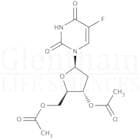
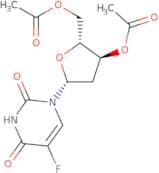
3',5'-Di-O-acetyl-5-fluoro-2'-deoxyuridine is a synthetic nucleoside analog that is primarily used in biochemical research and pharmaceutical applications. This compound features a fluorine atom at the 5-position of the uracil base, which enhances its antiviral properties, particularly against certain RNA viruses. The di-O-acetyl groups at the 3' and 5' positions of the sugar moiety improve the compound's lipophilicity, facilitating cellular uptake. As a derivative of deoxyuridine, it retains the essential structural characteristics of nucleosides, allowing it to participate in nucleic acid synthesis. Its mechanism of action often involves incorporation into viral RNA or DNA, leading to termination of nucleic acid chain elongation. The compound is typically characterized by its stability under physiological conditions, although it may undergo hydrolysis in the presence of nucleophiles. Due to its specific modifications, 3',5'-di-O-acetyl-5-fluoro-2'-deoxyuridine serves as a valuable tool in molecular biology and medicinal chemistry for studying nucleic acid interactions and developing antiviral therapies.
Formula:C13H15FN2O7
Synonyms:- 3',5'-Di-O-Acetyl-5-Fluoro-2'-Deoxy-D-Uridine
- 3',5'-Di-O-acetyl-2'-deoxy-5-fluoro-D-uridine
Sort by
Purity (%)
0
100
|
0
|
50
|
90
|
95
|
100
Found 2 products.
3',5'-Di-O-acetyl-2'-deoxy-5-fluorouridine
CAS:3',5'-Di-O-acetyl-2'-deoxy-5-fluorouridine is an antitumor agent that belongs to the class of heterocyclic ring. It is a pyridinium salt with a benzoic acid residue at position 3 and 5'. The heterocyclic ring is derived from alkylene, which has two double bonds in the chain. This compound has low toxicity and can be synthesized from chloroform, fluorouridine, and pyridine. 3',5'-Di-O-acetyl-2'-deoxy-5-fluorouridine inhibits growth of cancer cells by binding to ribosomes and preventing RNA synthesis. It also acts as an alkylating agent that binds to DNA, leading to crosslinking between strands of DNA. This leads to cell death by apoptosis or necrosis due to interference with DNA replication.Formula:C13H15FN2O7Purity:Min. 95%Molecular weight:330.27 g/mol