CAS 11054-24-3
:OphiopogoninA
Description:
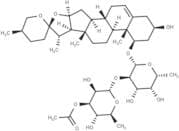
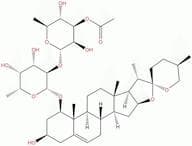
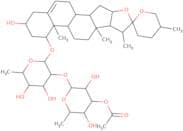
Ophiopogonin A is a natural compound primarily derived from the plant Ophiopogon japonicus, commonly known as dwarf lilyturf. It belongs to the class of steroidal saponins and is characterized by its unique chemical structure, which includes a steroid backbone and sugar moieties. This compound is known for its potential pharmacological properties, including anti-inflammatory, antioxidant, and neuroprotective effects. Ophiopogonin A has been studied for its role in traditional medicine, particularly in East Asian herbal practices, where it is believed to support respiratory health and enhance overall vitality. Its mechanism of action may involve modulation of various biological pathways, contributing to its therapeutic effects. Additionally, Ophiopogonin A exhibits low toxicity, making it a candidate for further research in drug development and natural health products. As with many natural compounds, ongoing studies aim to elucidate its full range of biological activities and potential applications in modern medicine.
Formula:C41H64O13
Synonyms:- b-D-Galactopyranoside, (1b,3b,25R)-3-hydroxyspirost-5-en-1-yl2-O-(3-O-acetyl-6-deoxy-a-L-mannopyranosyl)-6-deoxy-
- β-D-Galactopyranoside, (1β,3β,25R)-3-hydroxyspirost-5-en-1-yl 2-O-(3-O-acetyl-6-deoxy-α-L-mannopyranosyl)-6-deoxy-
- Ophiopogonin A
- b-D-Galactopyranoside
Sort by
Purity (%)
0
100
|
0
|
50
|
90
|
95
|
100
Found 4 products.
Ophiopogonin A
CAS:Ophiopogonin A is a natural productFormula:C41H64O13Purity:98%Color and Shape:SolidMolecular weight:764.95Ophiopogonin A
CAS:Ophiopogonin A is a steroidal saponin compound, which is derived from the root of the Ophiopogon japonicus plant, widely used in traditional Chinese medicine. This compound is known for its significant pharmacological effects, primarily due to its anti-inflammatory and antioxidant properties. The mode of action of Ophiopogonin A involves modulation of various signaling pathways, including the inhibition of pro-inflammatory cytokines and the suppression of oxidative stress markers, which contributes to its therapeutic potential in inflammatory diseases.
Formula:C41H64O13Purity:Min. 95%Molecular weight:764.9 g/molRef: 3D-LAA05424
Discontinued product