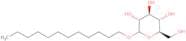
CAS 110615-47-9
:D-Glucopyranose, oligomeric, C10-16-alkyl glycosides
Description:
D-Glucopyranose, oligomeric, C10-16-alkyl glycosides, identified by the CAS number 110615-47-9, are a class of non-ionic surfactants derived from glucose. These compounds consist of oligomeric chains of glucose units linked to long-chain alkyl groups, typically ranging from 10 to 16 carbon atoms. They exhibit excellent surface-active properties, making them effective in reducing surface tension and enhancing wetting, emulsifying, and foaming capabilities. These glycosides are biodegradable and considered environmentally friendly, which makes them suitable for use in various applications, including personal care products, household cleaners, and industrial formulations. Additionally, they are known for their mildness, making them suitable for sensitive skin formulations. Their amphiphilic nature allows them to interact with both hydrophilic and hydrophobic substances, contributing to their versatility in formulations. Overall, D-Glucopyranose, oligomeric, C10-16-alkyl glycosides are valued for their performance, safety, and sustainability in a wide range of applications.
Formula:Unspecified
Synonyms:- (C10-16)Alkyl D-Glycopyranoside
- <span class="text-smallcaps">D</span>-Glucopyranose, oligomeric, C<sub>10-16</sub>-alkyl glycosides
- Alkyl D-Glucopyranoside
- Apg 1214
- C10-16 Alkyl a(+b) D- mono and oligoglucopyranosides
- D-Glucopyranose, Oligomeric, C10-16-Alkyl Glycosides
- D-Glucopyranose,Oligomeric,C10-C16-Alkylglycosides
- D-Glucopyranoside, alkyl (C=10-16), oligomeric
- GreenAPG 1214
- Lauryl polyglucose
- Mixture, D-Glucopyrasone, Oligomeric, C10-16-Alkyl Glycosides
- See more synonyms
Sort by
Purity (%)
0
100
|
0
|
50
|
90
|
95
|
100
Found 1 products.
Lauryl glucoside
CAS:Lauryl glucoside is a cationic surfactant that has been used in pharmaceutical preparations for the treatment of bacterial vaginosis. Lauryl glucoside is a non-irritating, low-toxicity compound that is effective against most Gram-positive and Gram-negative bacteria. It has been shown to be an effective antimicrobial agent with an adsorption mechanism based on hydrogen bonding. This agent also has been shown to have skin cancer prevention properties, as it is able to inhibit the proliferation of human skin cells. Lauryl glucoside can also cause allergic reactions or sensitization in some individuals, while diamine tetraacetic acid (DTA) may be used as a stabilizer in products containing lauryl glucoside.Purity:Min. 95%