CAS 110652-62-5
:Peptide M
Description:
Peptide M, identified by the CAS number 110652-62-5, is a synthetic peptide that has garnered interest in various fields, including biochemistry and pharmacology. As a peptide, it is composed of a specific sequence of amino acids linked by peptide bonds, which gives it unique biological properties. Peptides like Peptide M often exhibit functions such as hormone activity, enzyme regulation, or cell signaling. The characteristics of Peptide M may include its solubility in water or organic solvents, stability under physiological conditions, and potential for biological activity, which can be influenced by its amino acid composition and structure. Additionally, peptides are typically characterized by their molecular weight, which is determined by the number and type of amino acids present. The specific applications of Peptide M can vary, but it may be explored for therapeutic uses, including its role in modulating biological processes or as a research tool in studying protein interactions. Further investigation into its pharmacokinetics and pharmacodynamics would be essential for understanding its full potential in scientific and medical applications.
Formula:C81H141N21O31
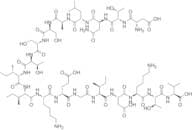
Synonyms:- Asp-Thr-Asn-Leu-Ala-Ser-Ser-Thr-Ile-Ile-Lys-Glu-Gly-Ile-Asp-Lys-Thr-Val
Sort by
Purity (%)
0
100
|
0
|
50
|
90
|
95
|
100
Found 2 products.
Peptide M
CAS:Peptide M is a synthetic Peptide, 50 aa, derived from streptococcus M protein, containing an additional c-terminal cysteine residue.Formula:C81H141N21O31Purity:98%Color and Shape:SolidMolecular weight:1905.11Peptide M
CAS:Peptide M is a synthetic peptide made up of the amino acid sequence: DTNLASSTIIKEGIDKTV. It is an immunogenic component corresponding to amino acids 303-320 of the photoreceptor cell protein, retinal S-antigen. During studies, it has been found to induce experimental autoimmune uveitis (EAU) in animals which is a T-cell mediated disease causing retina, pineal gland and uveal tract inflammation. EAU successfully models ocular autoimmune diseases such as birdshot retinochoroidopathy and sympathetic ophthalmia. Therefore peptide M can be used in research into these diseases. Structural studies have demonstrated peptide M to form macromolecular assemblies and then an intermolecular beta-sheet structure between a pH range of 4-9.5. It has been suggested, that when the peptide M adopts the monomeric state its structure and beta sheets become disordered. It is also thought that through its extended beta-type conformation peptide M is able to position itself between the major histocompatibility complex and the T-cell receptor.Formula:C81H141N21O31Purity:Min. 95%Molecular weight:1,905.11 g/mol