CAS 111-58-0
:Oleoylethanolamide
Description:
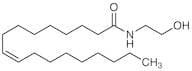
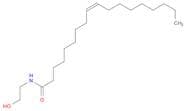
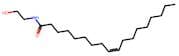
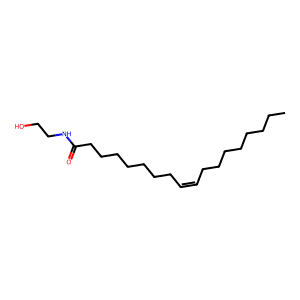
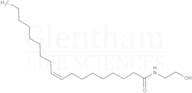
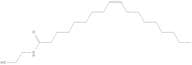
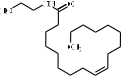
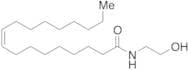
Oleoylethanolamide (OEA) is a fatty acid ethanolamide that is derived from oleic acid, a common monounsaturated fatty acid. It is characterized by its role as a signaling molecule in various biological processes, particularly in the regulation of appetite and energy homeostasis. OEA is known to activate peroxisome proliferator-activated receptor alpha (PPAR-α), which plays a crucial role in lipid metabolism and inflammation. This compound is typically found in the small intestine and is produced in response to dietary fats. OEA has been studied for its potential therapeutic effects, including weight management and neuroprotective properties. In terms of physical properties, OEA is a viscous liquid at room temperature and is soluble in organic solvents but has limited solubility in water. Its molecular structure features an amide bond, which contributes to its biological activity. Overall, oleoylethanolamide is significant in both biochemistry and pharmacology, with ongoing research exploring its various health implications.
Formula:C20H39NO2
InChI:InChI=1S/C20H39NO2/c1-2-3-4-5-6-7-8-9-10-11-12-13-14-15-16-17-20(23)21-18-19-22/h9-10,22H,2-8,11-19H2,1H3,(H,21,23)/b10-9-
InChI key:InChIKey=BOWVQLFMWHZBEF-KTKRTIGZSA-N
SMILES:C(CCCCC/C=C\CCCCCCCC)CC(NCCO)=O
Synonyms:- (9Z)-N-(2-Hydroxyethyl)-9-octadecenamide
- (9Z)-N-(2-hydroxyethyl)octadec-9-enamide
- 9-Octadecenamide, N-(2-hydroxyethyl)-
- 9-Octadecenamide, N-(2-hydroxyethyl)-, (9Z)-
- 9-Octadecenamide, N-(2-hydroxyethyl)-, (Z)-
- Am 3101
- Monoethanolamine oleic acid amide
- N-(2-Hydroxyethyl)-9-Z-octadecenamide
- N-(2-Hydroxyethyl)-9-octadecenamide
- N-(2-Hydroxyethyl)oleamide
- N-Oleoyl-2-aminoethanol
- N-Oleoylethanolamide
- N-Oleoylethanolamine
- Oleamide MEA
- Oleamide, N-(2-hydroxyethyl)-
- Oleic acid ethanolamide
- Oleic acid monoethanolamide
- Oleoyl monoethanolamide
- Oleoylethanolamide
- See more synonyms
Sort by
Purity (%)
0
100
|
0
|
50
|
90
|
95
|
100
Found 12 products.
N-Oleoylethanolamine
CAS:Formula:C20H39NO2Purity:>98.0%(GC)Color and Shape:White to Almost white powder to crystalMolecular weight:325.54(9Z)-N-(2-hydroxyethyl)octadec-9-enamide
CAS:Formula:C20H39NO2Purity:85%Color and Shape:SolidMolecular weight:325.5292Oleoylethanolamide
CAS:Oleoylethanolamide (N-Oleoylethanolamide) is a high affinity endogenous agonist of PPAR-α.Formula:C20H39NO2Purity:99.98%Color and Shape:SolidMolecular weight:325.53Ref: TM-T12296
2mg34.00€5mg50.00€1mL*10mM (DMSO)55.00€10mg75.00€25mg138.00€50mg236.00€100mg356.00€200mg522.00€N-Oleoylethanolamine
CAS:Formula:C20H39NO2Purity:(HPLC) ≥ 98.0%Color and Shape:White to off-white powderMolecular weight:325.53N-Oleoylethanolamide
CAS:Controlled ProductApplications N-Oleoylethanolamide is an agonist of peroxisome proliferator-activated receptor-α (PPAR-α). N-Oleoylethanolamide generates an intestinal signal that stimulates central dopamine activity establishing a link between caloric-homeostatic and hedonic-homeostatic controllers. Oleoylethanolamide has been implicated as the molecular mechanism associated with gastric bypass success. N-Oleoylethanolamide is a selective GPR55 agonist.
References Sasso, O., et. al.: Pain, 154, 350 (2013); Begg, D.P., Woods, S.C.: Cell Met., 18, 459 (2013); Chem. and Eng. News p.7, Jan. 8 (2017)Formula:C20H39NO2Color and Shape:Off-WhiteMolecular weight:325.53N-(2-Hydroxyethyl)oleamide
CAS:Formula:C20H39NO2Purity:95.0%Color and Shape:SolidMolecular weight:325.537N-Oleoylethanolamide
CAS:N-Oleoylethanolamide (NOPE) is a fatty acid amide that is synthesized from oleic acid and ethanolamide. NOPE is a low potency compound that has been shown to cause mitochondrial membrane depolarization in mesenteric cells. It also activates the peroxisome proliferator-activated receptor alpha, which causes mitochondrial membrane potential to be maintained. NOPE has been shown to inhibit prostate cancer and bone cancer cell growth in vitro and reduce the size of prostate tumors in vivo. NOPE also inhibits the activity of two different enzymes that are involved in cellular processes such as apoptosis: protein kinase C and phosphodiesterase 4. The effects of NOPE on these enzymes may be due to its ability to bind with fatty acids or other lipids, thereby inhibiting their synthesis or function.Formula:C20H39NO2Purity:Min. 95%Color and Shape:PowderMolecular weight:325.53 g/mol