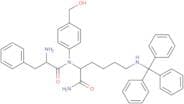
CAS 1116085-99-4
:Phe-Lys(Trt)-PAB
Description:
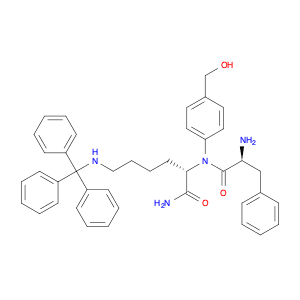
Phe-Lys(Trt)-PAB, with the CAS number 1116085-99-4, is a synthetic peptide that consists of phenylalanine (Phe) and lysine (Lys) residues, where the lysine is protected by a trityl (Trt) group and is conjugated to a para-aminobenzyl (PAB) moiety. This compound is typically used in peptide synthesis and drug development due to its ability to facilitate the attachment of various functional groups or drug moieties. The presence of the trityl group provides stability during synthesis, protecting the amino group of lysine from unwanted reactions. The para-aminobenzyl group can serve as a linker or a carrier for further modifications, enhancing the compound's versatility in bioconjugation applications. Phe-Lys(Trt)-PAB is characterized by its relatively high molecular weight and specific solubility properties, which can vary depending on the solvent used. Its structural features make it an important intermediate in the synthesis of more complex peptides or therapeutic agents, particularly in the fields of medicinal chemistry and biochemistry.
Formula:C41H44N4O3
Synonyms:- Phe-Lys(Trt)-PAB
- L-Lysinamide, L-phenylalanyl-N-[4-(hydroxymethyl)phenyl]-N6-(triphenylmethyl)-
Sort by
Purity (%)
0
100
|
0
|
50
|
90
|
95
|
100
Found 5 products.
(S)-2-((S)-2-Amino-N-(4-(hydroxymethyl)phenyl)-3-phenylpropanamido)-6-(tritylamino)hexanamide
CAS:Formula:C41H44N4O3Purity:99%Molecular weight:640.8131Phe-Lys(Trt)-PAB
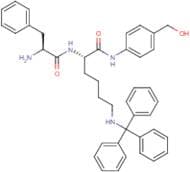
CAS:Phe-Lys(Trt)-PAB is a cathepsin-cleavable linker utilized in the development of antibody-drug conjugates (ADCs)[1], serving as a crucial component forFormula:C41H44N4O3Purity:97.87% - 99.35%Color and Shape:SolidMolecular weight:640.81Phe-Lys(trt)-PAB
CAS:Phe-Lys(trt)-PAB is a peptide that has been shown to activate the TRPA1 ion channel. The Phe-Lys(trt)-PAB molecule binds to the TRPA1 receptor and mimics the effect of a noxious stimulus, such as an environmental irritant or chemical toxin, by activating and opening the TRPA1 ion channel. This activation leads to an influx of calcium ions and other ions into cells, which triggers pain signals in sensory neurons. Phe-Lys(trt)-PAB also inhibits cyclic nucleotide phosphodiesterase (PDE) enzymes. TRPA1 receptors are implicated in various diseases including chronic pain, asthma and inflammatory diseases.Formula:C41H44N4O3Purity:Min. 95%Molecular weight:640.8 g/mol