CAS 112-27-6
:Triethylene glycol
Description:
Triethylene glycol (TEG) is a colorless, odorless, and hygroscopic liquid that belongs to the class of glycols, specifically polyether glycols. It has a molecular formula of C6H14O4 and a relatively high molecular weight compared to other glycols. TEG is known for its excellent solubility in water and a variety of organic solvents, making it a versatile compound in industrial applications. It has a high boiling point and low volatility, which contributes to its stability under heat. TEG is commonly used as a humectant, solvent, and plasticizer, as well as in the production of resins and as an intermediate in the synthesis of other chemicals. Additionally, it serves as a dehydrating agent in natural gas processing and as a coolant in various applications. While generally considered safe, it is important to handle TEG with care, as it can cause irritation upon contact with skin or eyes and may pose health risks if ingested or inhaled in significant quantities.
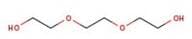
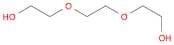
Formula:C6H14O4
InChI:InChI=1S/C6H14O4/c7-1-3-9-5-6-10-4-2-8/h7-8H,1-6H2
InChI key:InChIKey=ZIBGPFATKBEMQZ-UHFFFAOYSA-N
SMILES:C(COCCO)OCCO
Synonyms:- 1,2-Bis(2-hydroxyethoxy)ethane
- 1,2-Di(β-hydroxyethoxy)ethane
- 1,8-Dihydroxy-3,6-dioxaoctane
- 2,2'-(1,2-Ethanediyl bis (oxy))-bisethanol
- 2,2'-(Ethylendioxy)diethanol
- 2,2'-(Etilendioxi)Dietanol
- 2,2'-Ethylenedioxybis(ethanol)
- 2,2'-Ethylenedioxydiethanol
- 2,2'-[1,2-Ethanediylbis(oxy)]bisethanol
- 2,2'-[Ethane-1,2-Diylbis(Oxy)]Diethanol
- 2,2-(Ethylenedioxy)Diethanol
- 2,2′-(Ethane-1,2-diylbis(oxy))bis(ethanol)
- 2,2′-[1,2-Ethanediylbis(oxy)]bis[ethanol]
- 2-[2-(2-Hydroxyethoxy)ethoxy]ethan-1-ol
- 2-[2-(2-Hydroxyethoxy)ethoxy]ethanol
- 3,6-Dioxaoctane-1,8-diol
- Crestwood A
- Ethanol, 2,2'-[1,2-ethanediylbis(oxy)]bis-
- Ethanol, 2,2'-bis[1,2-ethanediylbis(oxy)]bis-
- Glycol bis(hydroxyethyl) ether
- Hanlon TEG
- Nsc 60758
- Octane-1,8-Diol, 3,6-Dioxa-
- TEG
- TEG (glycol)
- Tgme
- Triaethylenglykol
- Triethylene Glycol Anhydrous
- Trigen
- Triglycol
- Trigol
- Trigol 95+ % (GLC)
- See more synonyms
Sort by
Purity (%)
0
100
|
0
|
50
|
90
|
95
|
100
Found 14 products.
Triethylene Glycol
CAS:Formula:C6H14O4Purity:>99.0%(GC)Color and Shape:Colorless to Almost colorless clear liquidMolecular weight:150.17Triethylene glycol, 99%
CAS:Triethylene glycol is used as a plasticizer, as an additive for hydraulic fluids and brake fluids, and as a disinfectant. It is an active component of certain pigments, printing dyes, inks and paste. It finds application as a liquid desiccant and used in the dehydration of natural gas, carbon dioxFormula:C6H14O4Purity:99%Color and Shape:Liquid, Clear colorlessMolecular weight:150.17Triethylene Glycol
CAS:Ether-alcohols and their halogenated, sulfonated, nitrated or nitrosated derivatives, nesoiFormula:C6H14O4Color and Shape:Colorless Clear LiquidMolecular weight:150.172,2'-Ethylenedioxydiethanol
CAS:Formula:C6H14O4Purity:97%Color and Shape:LiquidMolecular weight:150.1730Triethylene glycol
CAS:Triethylene glycolPurity:99%Color and Shape:LiquidMolecular weight:150.17295g/molTriethylene glycol
CAS:Formula:C6H14O4Purity:≥ 99.0%Color and Shape:Clear, colourless to almost colourless liquidMolecular weight:150.17Triethylene glycol
CAS:Triethylene glycol is a PEG-based PROTAC linker that can be used to synthesise PROTAC molecules.Formula:C6H14O4Purity:99.51%Color and Shape:Colourless LiquidMolecular weight:150.17Triglycol
CAS:Controlled ProductApplications Triglycol is used in a mixture with 2-amino-2-methyl-1-propanol in a CO2 absorption-regeneration process.
References Zheng, C., et. al.: Ind. Eng. Chem. Res., 51, 11236 (2012)Formula:C6H14O4Color and Shape:NeatMolecular weight:150.172,2′-(Ethane-1,2-diylbis(oxy))diethanol
CAS:Formula:C6H14O4Purity:95.0%Color and Shape:Liquid, ClearMolecular weight:150.174Triethylene glycol
CAS:Triethylene glycol is a polyether that is used as a solvent and an additive in various products. Triethylene glycol can be found in water-based paints, cosmetics, and polyurethane plastics. It has a low toxicity to humans and animals. The rate constant of the reaction between triethylene glycol and coumarin derivatives has been determined by fluorescence probe techniques. The polymerization mechanism of triethylene glycol has been studied with the aid of polyvinyl alcohol (PVA) as a model system. This polymerization mechanism depends on the coordination geometry of the reactants. The polymerization of triethylene glycol is initiated by oxidative addition to produce the monoethyl ether followed by elimination to form the corresponding diols, which are then oxidized to give the final product. Triethylene glycol is also used in cell nuclei staining techniques to identify nuclear morphology or DNA content.Formula:C6H14O4Purity:Min. 98 Area-%Color and Shape:Clear LiquidMolecular weight:150.17 g/molTriethylene Glycol extrapure, 99%
CAS:Formula:C6H14O4Purity:min. 99%Color and Shape:Clear, Colourless to pale yellow, Viscous LiquidMolecular weight:150.17Triethylene Glycol extrapure AR, 99%
CAS:Formula:C6H14O4Purity:min. 99%Color and Shape:Clear, Colourless, Viscous liquidMolecular weight:150.17