CAS 112408-67-0
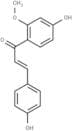
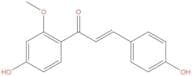
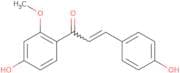
:2-Propen-1-one, 1-(4-hydroxy-2-methoxyphenyl)-3-(4-hydroxyphenyl)-,(2E)-
Description:
2-Propen-1-one, 1-(4-hydroxy-2-methoxyphenyl)-3-(4-hydroxyphenyl)-, commonly referred to by its CAS number 112408-67-0, is an organic compound characterized by its structure, which features a propenone backbone substituted with hydroxy and methoxy groups. This compound typically exhibits properties associated with phenolic compounds, including potential antioxidant activity due to the presence of hydroxyl groups. The methoxy group can influence its solubility and reactivity, making it more lipophilic. The compound may also display various biological activities, which are often investigated in the context of medicinal chemistry and pharmacology. Its structural features suggest potential applications in fields such as organic synthesis, materials science, and possibly as a precursor for more complex molecules. Additionally, the presence of multiple aromatic rings may contribute to its stability and reactivity under certain conditions. Overall, this compound represents a class of substances that are of interest for their chemical properties and potential applications in various scientific domains.
Formula:C16H14O4
Sort by
Purity (%)
0
100
|
0
|
50
|
90
|
95
|
100
Found 3 products.
3-Deoxysappanchalcone
CAS:3-Deoxysappanchalcone is an effective HO-1 inducer at the translational level.Formula:C16H14O4Color and Shape:SolidMolecular weight:270.282'-O-Methylisoliquiritigenin
CAS:2'-O-Methylisoliquiritigenin is a methylated flavonoid, which is a specialized biologically active compound found naturally in certain plants, most notably in licorice species. It is an analog of isoliquiritigenin, produced through methylation at the 2' position of the molecule, which enhances its chemical stability and potential bioactivity. The primary mode of action for 2'-O-Methylisoliquiritigenin involves the modulation of various biological pathways, including anti-inflammatory and antioxidant mechanisms. It has been shown to interact with key cellular signaling pathways influencing gene expression, cell cycle regulation, and apoptosis.
Formula:C16H14O4Purity:Min. 95%Color and Shape:PowderMolecular weight:270.28 g/mol