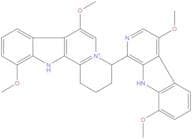
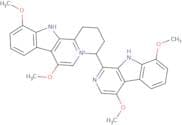
![1H-Indolo[2,3-a]quinolizin-5-ium,4-(4,8-dimethoxy-9H-pyrido[3,4-b]indol-1-yl)-2,3,4,12-tetrahydro-…](/_next/image/?url=https%3A%2Fstatic.cymitquimica.com%2Fcas-image%2Fthumb-webp%2F389564-1h-indolo-23-a-quinolizin-5-ium-4-48-dimethoxy-9h-pyrido-34-b-indol-1-yl-23412-tetrahydro-711-dimethoxy-9ci.webp&w=3840&q=75)
CAS 112503-87-4
:1H-Indolo[2,3-a]quinolizin-5-ium,4-(4,8-dimethoxy-9H-pyrido[3,4-b]indol-1-yl)-2,3,4,12-tetrahydro-7,11-dimethoxy-(9CI)
Description:
1H-Indolo[2,3-a]quinolizin-5-ium, 4-(4,8-dimethoxy-9H-pyrido[3,4-b]indol-1-yl)-2,3,4,12-tetrahydro-7,11-dimethoxy- (CAS 112503-87-4) is a complex organic compound characterized by its polycyclic structure, which incorporates both indole and quinolizine moieties. This substance features multiple methoxy groups, contributing to its potential solubility and reactivity. The presence of nitrogen atoms within its structure suggests possible basicity and the ability to participate in various chemical reactions, including protonation and coordination with metal ions. The compound's intricate arrangement of fused rings may impart unique electronic properties, making it of interest in fields such as medicinal chemistry and materials science. Its potential biological activity could be explored in pharmacological studies, particularly due to the structural motifs common in bioactive compounds. Overall, this compound exemplifies the complexity and diversity of organic molecules, with implications for both theoretical studies and practical applications in drug development and synthesis.
Formula:C30H29N4O4
Synonyms:- 1H-Indolo[2,3-a]quinolizin-5-ium,4-(4,8-dimethoxy-9H-pyrido[3,4-b]indol-1-yl)-2,3,4,12-tetrahydro-7,11-dimethoxy-,(?à)-
- 9H-Pyrido[3,4-b]indole,1H-indolo[2,3-a]quinolizin-5-ium deriv.
- (?à)-Picrasidine S
- Picrasidine S
Sort by
Purity (%)
0
100
|
0
|
50
|
90
|
95
|
100
Found 3 products.
Picrasidine S
CAS:Formula:C30H29N4O4Purity:95%~99%Color and Shape:Yellow powderMolecular weight:509.585Picrasidine S
CAS:Picrasidine S is a natural alkaloid compound, which is derived from the plant Picrasma quassioides, commonly found in East Asia. This source belongs to the Simaroubaceae family, known for producing various bioactive secondary metabolites. The mode of action of Picrasidine S involves interference with cellular pathways that regulate proliferation, apoptosis, and metastasis of cancer cells. It specifically targets key signaling mechanisms, potentially inhibiting tumor growth and promoting programmed cell death.Formula:C30H29N4O4Purity:Min. 95%Molecular weight:509.6 g/mol