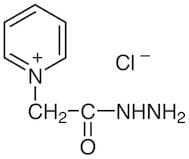
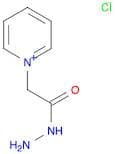
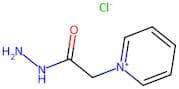
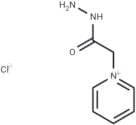
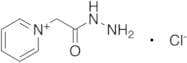
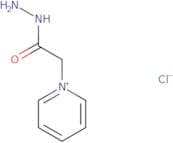
CAS 1126-58-5
:Girard's
Description:
Girard's reagent T, also known as 2,4-dinitrophenylhydrazine (DNPH), is a chemical compound commonly used in organic chemistry for the identification and characterization of carbonyl compounds, such as aldehydes and ketones. It is characterized by its ability to form stable hydrazone derivatives upon reaction with carbonyl groups, which can be easily isolated and analyzed. The reagent is typically a yellow to orange crystalline solid, and its derivatives often exhibit distinct melting points, aiding in the identification of the original carbonyl compound. Girard's reagent T is also notable for its sensitivity and specificity, making it a valuable tool in both laboratory and industrial applications, including the analysis of pharmaceuticals and environmental samples. Additionally, it is important to handle this reagent with care due to its potential toxicity and the need for appropriate safety measures during use. Overall, Girard's reagent T plays a significant role in organic synthesis and analytical chemistry.
Formula:C7H10N3O·Cl
InChI:InChI=1S/C7H9N3O.ClH/c8-9-7(11)6-10-4-2-1-3-5-10;/h1-5H,6,8H2;1H
InChI key:InChIKey=NDXLVXDHVHWYFR-UHFFFAOYSA-N
SMILES:C(C(NN)=O)[N+]=1C=CC=CC1.[Cl-]
Synonyms:- 1-(2-Hydrazino-2-oxoethyl)pyridinium chloride
- 1-(2-Hydrazinyl-2-Oxoethyl)Pyridinium Chloride
- 1-(2-Hydrazinyl-2-oxoethyl)pyridin-1-iumchloride
- 1-(Carboxymethyl)pyridinium chloride, hydrazide
- 1-[(Hydrazinecarbonyl)methyl]pyridin-1-ium chloride
- 1126-58-5
- Girard's P reagent
- Girard-P reagent
- Pyridinioacetohydrazide chloride
- Pyridinium, 1- (2-hydrazino-2-oxoethyl)-, chloride
- Pyridinium, 1-(2-Hydrazinyl-2-Oxoethyl)-, Chloride (1:1)
- Pyridinium, 1-(carboxymethyl)-, chloride, hydrazide
- See more synonyms
Sort by
Purity (%)
0
100
|
0
|
50
|
90
|
95
|
100
Found 9 products.
Girard's Reagent P
CAS:Formula:C7H10ClN3OPurity:>95.0%(T)Color and Shape:White to Light yellow to Light orange powder to crystalMolecular weight:187.631-(2-Hydrazinyl-2-oxoethyl)pyridin-1-ium chloride
CAS:Formula:C7H10ClN3OPurity:97%Color and Shape:SolidMolecular weight:187.62681-(2-Hydrazinyl-2-oxoethyl)pyridin-1-ium chloride
CAS:1-(2-Hydrazinyl-2-oxoethyl)pyridin-1-ium chloridePurity:97%Molecular weight:187.63g/molGirard's reagent P
CAS:Formula:C7H10ClN3OPurity:≥ 95.0%Color and Shape:White to light yellow or light orange crystalline powderMolecular weight:187.63Girard's Reagent P
CAS:Girard's Reagent P, a cationic hydrazine compound, serves as a derivatization agent for the quantification of glycans, oxysterols, and 5-methylcytosineFormula:C7H10N3O·ClColor and Shape:SolidMolecular weight:187.63Girard's Reagent P
CAS:Controlled ProductApplications Girard’s reagent used in the identification and quantification of protein carbonylation as well as in the modification of nucleosides and nucleotides. Used in the preparation of potent photoactive agents.
References Mirzaei, H., et al.: J. Chrom. A, 1134, 122 (2007); Kanofsky, J.R., et al.: Photochem. Photobiol., 73, 349 (2001);Formula:C7H10N3O•ClColor and Shape:NeatMolecular weight:152.183545Girard's reagent P
CAS:Girard's reagent P is a mixture of phenylhydrazine and p-chloro-phenylhydrazine. It is used as a chemical test for the detection of carbonyl groups in organic compounds. This test has been shown to be sensitive to carotenoids, which are found in human serum or urine samples. Girard's reagent P can be used to identify cancer tissues by detecting the presence of hydroxyl groups that are found in the amino acids methionine and cysteine. The hydroxyl group reacts with the phenylhydrazine component of Girard's reagent P, giving off a purple color. Additionally, Girard's reagent P can be used in conjunction with other chemicals to identify specific types of cancer cells such as cerebrotendinous xanthomatosis and neuroblastoma, which have chemical structures that contain hydroxyl groups.Formula:C7H10ClN3OPurity:Min. 95%Color and Shape:White PowderMolecular weight:187.63 g/mol1-(2-Hydrazinyl-2-oxoethyl)pyridin-1-ium chloride
CAS:Formula:C7H10ClN3OPurity:97%Color and Shape:SolidMolecular weight:187.63