CAS 112649-21-5
:Garcinone E
Description:
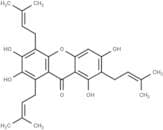
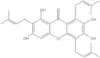
Garcinone E is a naturally occurring chemical compound classified as a xanthone, which is a type of polyphenolic compound. It is primarily derived from the Garcinia species, particularly Garcinia mangostana, known for its potential health benefits. Garcinone E exhibits a range of biological activities, including antioxidant, anti-inflammatory, and anticancer properties, making it of interest in pharmacological research. The compound's structure features a fused ring system that contributes to its reactivity and interaction with biological targets. In terms of solubility, Garcinone E is generally soluble in organic solvents, which is typical for many xanthones, but may have limited solubility in water. Its potential applications in medicine and nutraceuticals are being explored, particularly in the context of its therapeutic effects. As with many natural products, further studies are necessary to fully elucidate its mechanisms of action and potential benefits in human health.
Formula:C28H32O6
InChI:InChI=1S/C28H32O6/c1-14(2)7-10-17-20(29)13-21-23(24(17)30)27(33)22-18(11-8-15(3)4)25(31)26(32)19(28(22)34-21)12-9-16(5)6/h7-9,13,29-32H,10-12H2,1-6H3
InChI key:InChIKey=WVJYEKGQSBGNRP-UHFFFAOYSA-N
SMILES:C(C=C(C)C)C1=C2C(=C(CC=C(C)C)C(O)=C1O)OC=3C(C2=O)=C(O)C(CC=C(C)C)=C(O)C3
Synonyms:- Garcinone E
- 9H-Xanthen-9-one, 2,3,6,8-tetrahydroxy-1,4,7-tris(3-methyl-2-buten-1-yl)-
- 9H-Xanthen-9-one,2,3,6,8-tetrahydroxy-1,4,7-tris(3-methyl-2-butenyl)- (9CI)
- Garcinone E
- 9H-Xanthen-9-one, 2,3,6,8-tetrahydroxy-1,4,7-tris(3-methyl-2-butenyl)-
- 2,3,6,8-Tetrahydroxy-1,4,7-tris(3-methyl-2-buten-1-yl)-9H-xanthen-9-one
- 7-O-Demethyl-5-prenyl-α-mangostin
Sort by
Purity (%)
0
100
|
0
|
50
|
90
|
95
|
100
Found 2 products.
Garcinone E
CAS:Garcinone E is active constituents in the anticomplement assay used.Formula:C28H32O6Purity:98%Color and Shape:SolidMolecular weight:464.55Garcinone E
CAS:Garcinone E is a natural compound classified as a xanthone, which is derived from the fruit of the Garcinia species, particularly Garcinia mangostana. This source is renowned for its rich phytochemical composition, which includes numerous bioactive molecules. Garcinone E, in particular, exhibits a mode of action primarily associated with its ability to interfere with cancer cell proliferation and induce apoptosis. The compound operates by modulating various signaling pathways, including those involved in cell cycle regulation and apoptosis, thus demonstrating significant antiproliferative effects against certain cancer cell lines.Formula:C28H32O6Purity:Min. 95%Molecular weight:464.50 g/mol