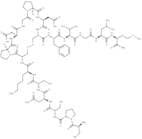
CAS 112748-19-3
:scyliorhinin II
Description:
Scyliorhinin II is a bioactive compound derived from the skin of certain species of sharks, particularly the dogfish shark. It belongs to a class of substances known as squalamine-like compounds, which are characterized by their unique steroidal structure. Scyliorhinin II exhibits notable antimicrobial properties, making it of interest in pharmaceutical research, particularly for its potential applications in treating infections. The compound has been studied for its ability to inhibit the growth of various bacteria and fungi, suggesting a role in immune defense mechanisms. Additionally, scyliorhinin II may possess anticancer properties, as preliminary studies indicate it can affect cell proliferation and induce apoptosis in certain cancer cell lines. Its mechanism of action is thought to involve disruption of cellular membranes and interference with metabolic processes. Overall, scyliorhinin II represents a promising area of research in natural product chemistry and pharmacology, with potential implications for developing new therapeutic agents.
Formula:C77H119N21O26S3
Sort by
Purity (%)
0
100
|
0
|
50
|
90
|
95
|
100
Found 2 products.
Scyliorhinin II
CAS:Scyliorhinin II, a cyclic Tachykinin peptide, is a potent NK3 receptor agonist.Formula:C77H119N21O26S3Purity:98%Color and Shape:SolidMolecular weight:1851.09Scyliorhinin II
CAS:Scyliorhinin II is a research tool that belongs to the ligands, receptors, and cell biology category. It has been shown to bind to the ion channels of cells in vitro and in vivo. Scyliorhinin II can be used as an inhibitor for many different types of ion channels, including nicotinic acetylcholine receptor (nAChR), GABA receptor (GABAR), and glycine receptor (GlyR). This drug has been shown to inhibit the binding of an antibody to its antigen in an ELISA assay. Scyliorhinin II also has been shown to inhibit protein interactions by acting as a competitive antagonist at the N-terminal domain of p53.
Formula:C77H119N21O26S3Purity:Min. 95%Molecular weight:1,851.1 g/molRef: 3D-MEA74819
Discontinued product