CAS 1128-10-5
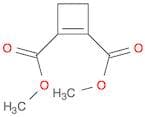
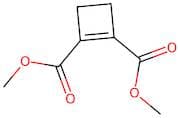
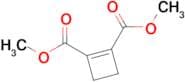
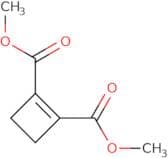
:dimethyl cyclobut-1-ene-1,2-dicarboxylate
Description:
Dimethyl cyclobut-1-ene-1,2-dicarboxylate, with the CAS number 1128-10-5, is an organic compound characterized by its unique cyclic structure and the presence of two ester functional groups. This compound features a cyclobutene ring, which is a four-membered cyclic alkene, contributing to its reactivity and potential applications in organic synthesis. The dicarboxylate nature of the molecule indicates that it contains two carboxylate groups, each esterified with a methyl group, enhancing its solubility in organic solvents. Dimethyl cyclobut-1-ene-1,2-dicarboxylate is typically a colorless to pale yellow liquid, exhibiting a pleasant odor. It is known for its utility in various chemical reactions, including Diels-Alder reactions and as an intermediate in the synthesis of more complex organic molecules. The compound's reactivity is influenced by the strained cyclobutene ring, making it a valuable building block in synthetic organic chemistry. Safety precautions should be observed when handling this compound, as it may pose health risks if inhaled or ingested.
Formula:C8H10O4
InChI:InChI=1/C8H10O4/c1-11-7(9)5-3-4-6(5)8(10)12-2/h3-4H2,1-2H3
SMILES:COC(=O)C1=C(CC1)C(=O)OC
Synonyms:- 1,2-Dimethyl 1-cyclobutene-1,2-dicarboxylate
Sort by
Purity (%)
0
100
|
0
|
50
|
90
|
95
|
100
Found 4 products.
Dimethyl cyclobut-1-ene-1,2-dicarboxylate
CAS:Formula:C8H10O4Purity:95%Color and Shape:SolidMolecular weight:170.1626Dimethyl cyclobut-1-ene-1,2-dicarboxylate
CAS:Dimethyl cyclobut-1-ene-1,2-dicarboxylatePurity:95%Molecular weight:170.16g/molDimethyl cyclobut-1-ene-1,2-dicarboxylate
CAS:Dimethyl cyclobut-1-ene-1,2-dicarboxylate (DMCB) is a lipase inhibitor that belongs to the class of dicarboxylic acid esters. It is used as an immobilized catalyst in organic synthesis and has a high stereoselectivity. This compound has been shown to be effective in catalyzing the thermal isomerization of maleates to produce 1,2-diols with high yields. DMCB also has a spontaneous reaction with photosensitizers such as rose bengal and benzoporphyrin derivative. The maleate form can be converted into the diacid form by the enzyme maleate dehydrogenase, which is found in porcine tissues. The diacid form can then undergo hydrolysis by an esterase or glucuronidase, releasing DMCB and regenerating the original maleate substrate.Formula:C8H10O4Purity:Min. 95%Molecular weight:170.16 g/mol