CAS 113-59-7
:Chlorprothixene
Description:
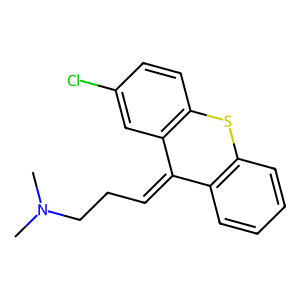
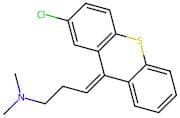
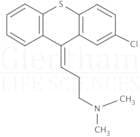
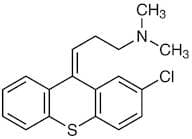
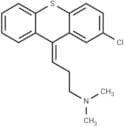
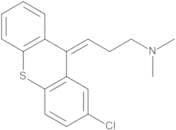
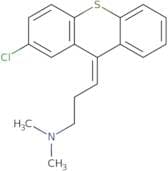
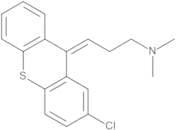
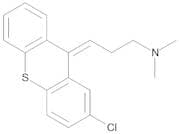
Chlorprothixene is an antipsychotic medication primarily used in the treatment of schizophrenia and other psychotic disorders. It belongs to the thioxanthene class of compounds and exhibits both antipsychotic and sedative properties. The chemical structure of chlorprothixene includes a thioxanthene core, which is characterized by a fused ring system containing sulfur and nitrogen atoms. This compound acts primarily as a dopamine antagonist, influencing neurotransmitter activity in the brain, particularly dopamine receptors, which is crucial for its therapeutic effects. Chlorprothixene is typically administered in oral form and may also be available as an injectable formulation. Its pharmacokinetics involve metabolism in the liver, with a relatively long half-life, allowing for once-daily dosing in many cases. Common side effects may include sedation, weight gain, and extrapyramidal symptoms, which are typical of many antipsychotic medications. Due to its sedative effects, caution is advised when operating machinery or driving while on this medication. Overall, chlorprothixene is an important option in the pharmacological management of severe mental health conditions.
Formula:C18H18ClNS
InChI:InChI=1S/C18H18ClNS/c1-20(2)11-5-7-14-15-6-3-4-8-17(15)21-18-10-9-13(19)12-16(14)18/h3-4,6-10,12H,5,11H2,1-2H3/b14-7-
InChI key:InChIKey=WSPOMRSOLSGNFJ-AUWJEWJLSA-N
SMILES:C(\CCN(C)C)=C/1\C=2C(SC=3C1=CC=CC3)=CC=C(Cl)C2
Synonyms:- (3E)-3-(2-chloro-9H-thioxanthen-9-ylidene)-N,N-dimethylpropan-1-aminium chloride
- (3Z)-3-(2-Chloro-9H-thioxanthen-9-ylidene)-N,N-dimethyl-1-propanamine
- (3Z)-3-(2-chloro-9H-thioxanthen-9-ylidene)-N,N-dimethylpropan-1-amine
- (Z)-3-(2-Chloro-9H-thioxanthen-9-ylidene)-N,N-dimethyl-1-propanamine
- 1-Propanamine, 3-(2-chloro-9H-thioxanthen-9-ylidene)-N,N-dimethyl-, (3Z)-
- 1-Propanamine, 3-(2-chloro-9H-thioxanthen-9-ylidene)-N,N-dimethyl-, (Z)-
- 2-Chloro-3-(Dibenzo(B,E)Thiin-10-Ylidene)Propyldimethylamine
- 9H-Thioxanthene, 1-propanamine deriv.
- CPT
- CPX
- Chlorprothixen
- Chlorprotixen
- Chlorprotixene
- Chlothixen
- Chorprothixene
- Clorprotixeno
- Cloxan
- Iaractan
- Mk 184
- N 714
- Paxyl
- Rentovet
- Ro 4-0403
- Ro 4-04033
- Tactaran
- Taractan
- Tarasan
- Tardan
- Thioxanthene-Δ9,γ-propylamine, 2-chloro-N,N-dimethyl-, (Z)-
- Thioxanthene-Δ<sup>9,γ</sup>-propylamine, 2-chloro-N,N-dimethyl-, (Z)-
- Traquilan
- Trictal
- Truxal
- Truxaletten
- Truxil
- Vetacalm
- cis-Chlorprothixene
- See more synonyms
Sort by
Purity (%)
0
100
|
0
|
50
|
90
|
95
|
100
Found 12 products.
{3-[(9Z)-2-chloro-9H-thioxanthen-9-ylidene]propyl}dimethylamine
CAS:Formula:C18H18ClNSPurity:98%Color and Shape:SolidMolecular weight:315.8602Chlorprothixene 100 µg/mL in Acetonitrile
CAS:Formula:C18H18ClNSColor and Shape:Single SolutionMolecular weight:315.86Chlorprothixene
CAS:Formula:C18H18ClNSPurity:>98.0%(T)Color and Shape:White to Orange to Green powder to crystalMolecular weight:315.86Chlorprothixene
CAS:Chlorprothixene (Truxal) is a typical antipsychotic drug of the thioxanthene class, which was the first of the series to be synthesized.Formula:C18H18ClNSPurity:98.77% - 99.756%Color and Shape:Pale Yellow Crystals SolidMolecular weight:315.86Chlorprothixene
CAS:Applications Chlorprothixene
Not a dangerous good if item is equal to or less than 1g/ml and there is less than 100g/ml in the packageFormula:C18H18ClNSColor and Shape:White To Light YellowMolecular weight:315.86Chlorprothixene
CAS:Controlled ProductChlorprothixene is a derivative of fluorescein and has been used in the treatment of bone cancer. The reaction mechanism of chlorprothixene is not well understood, but it is believed to be due to its ability to bind with 5-HT2 receptors. Chlorprothixene also has anti-inflammatory properties, which may be due to the inhibition of nitrogen atoms in immune cells. This drug has low potency and can cause drug interactions with other drugs that are metabolized by enzymes in the liver such as cytochrome P450 enzymes. It also has a trifluoroacetic acid substituent, which can cause significant pharmacokinetic changes when given intravenously.Formula:C18H18ClNSPurity:Min. 95%Color and Shape:PowderMolecular weight:315.86 g/mol

![{3-[(9Z)-2-chloro-9H-thioxanthen-9-ylidene]propyl}dimethylamine](/_next/image/?url=https%3A%2Fstatic.cymitquimica.com%2Fproducts%2FIN%2Fthumb%2FDA00785B.jpg&w=3840&q=75)