CAS 113104-25-9
:NSC228155
- NSC228155
- NSC-228155;NSC 228155
- NSC228155;NSC-228155;NSC 228155
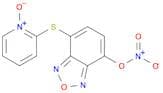
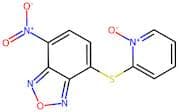
- 2-[(7-nitrobenzo[c][1,2,5]oxadiazol-4-yl)thio]pyridine 1-oxide
NSC 228155
CAS:NSC 228155 is an activator of EGFR, binding to the sEGFR dimerization domain II and modulate EGFR tyrosine phosphorylation.Formula:C11H6N4O4SPurity:99.84%Color and Shape:SolidMolecular weight:290.25Ref: TM-T6908
2mg34.00€5mg48.00€10mg63.00€25mg117.00€50mg178.00€100mg334.00€200mg469.00€1mL*10mM (DMSO)50.00€NSC 228155
CAS:NSC 228155 is a potent and selective inhibitor of histone deacetylases (HDACs) with anti-cancer activity. It was shown to inhibit the growth of human breast cancer cells, mda-mb-231, in culture by blocking the production of epidermal growth factor (EGF). NSC 228155 has a low toxicity profile and is effective at low doses. It inhibits angiogenesis through its ability to inhibit endothelial cell proliferation and migration. NSC 228155 also inhibits the growth of other types of cancer cells such as prostate cancer cells, colon cancer cells, and leukemia cells. The inhibition of HDACs leads to an increase in histone H3 acetylation levels and an increase in transcriptional activation. This results in higher protein synthesis rates and cell proliferation.
Formula:C11H6N4O4SPurity:Min. 95%Molecular weight:290.25 g/molRef: 3D-NEA10425
Discontinued product