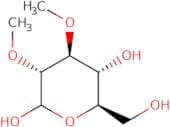
CAS 1133-45-5
:2,3-DI-O-METHYL-D-GLUCOPYRANOSE
Description:
2,3-Di-O-methyl-D-glucopyranose is a methylated derivative of D-glucose, characterized by the presence of two methoxy groups (-OCH3) at the 2 and 3 positions of the glucopyranose ring. This compound is a white crystalline solid, soluble in polar solvents such as methanol and ethanol, but less soluble in non-polar solvents. It exhibits a sweet taste, typical of many sugar derivatives, and is often used in research and as a building block in organic synthesis. The presence of methoxy groups alters its reactivity and physical properties compared to unmodified glucose, influencing its interactions in biological systems and its utility in various chemical applications. Additionally, 2,3-Di-O-methyl-D-glucopyranose can participate in glycosylation reactions, making it valuable in the synthesis of glycosides and other carbohydrate derivatives. Its structural characteristics can be analyzed using techniques such as NMR spectroscopy and mass spectrometry, which provide insights into its molecular configuration and purity.
Sort by
Purity (%)
0
100
|
0
|
50
|
90
|
95
|
100
Found 1 products.
2,3-Di-O-methyl-D-glucopyranose
CAS:2,3-Di-O-methyl-D-glucopyranose is a hederagenin, a disaccharide that is found in the bark of the Hedera helix plant. This compound has been shown to have anti-inflammatory properties and may be useful for treating arthritis. The hederagenin molecule contains two glucose molecules connected by an alpha 1,4 glycosidic bond. It also contains a carboxy group at C2 and a chain of carbons with a hydroxyl group at C3. There are three other chains of carbons with hydroxyl groups at C1, C4, and C5. These chains are linked together by an ether bond between carbon 5 and carbon 6. The 2,3-diO-methyl substituent is located on the O atom of one of the oxygen atoms in the hydroxyl groups. This molecule also has two triterpene glycosides attached to itFormula:C8H16O6Purity:Min. 95%Color and Shape:PowderMolecular weight:208.21 g/mol