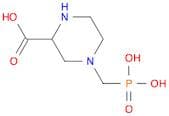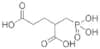
CAS 113919-36-1
:2-(PHOSPHONOMETHYL)-PENTANEDIOIC ACID
Description:
2-(Phosphonomethyl)-pentanedioic acid, also known as a phosphonic acid derivative, is characterized by its unique structure that includes both carboxylic acid and phosphonic acid functional groups. This compound typically appears as a white crystalline solid and is soluble in water due to the presence of polar functional groups. It is known for its chelating properties, allowing it to form stable complexes with metal ions, which can be useful in various applications, including agriculture as a herbicide and in water treatment processes. The presence of the phosphonomethyl group enhances its reactivity and potential for biological activity. Additionally, this compound may exhibit properties such as low volatility and stability under a range of environmental conditions. Its synthesis often involves multi-step organic reactions, and it is important to handle it with care due to potential toxicity associated with phosphonic acids. Overall, 2-(phosphonomethyl)-pentanedioic acid is a versatile compound with significant implications in both industrial and research settings.
Formula:C6H11O7P
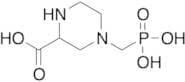
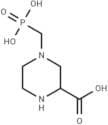
Synonyms:- 4-(Phosphonomethyl)-2-Piperazinecarboxylic Acid
- 2-Phosphonomethyl-Pentanedoic Acid
- PMPA(NMDAantagonist)
Sort by
Purity (%)
0
100
|
0
|
50
|
90
|
95
|
100
Found 3 products.
PMPA (NMDA antagonist)
CAS:Controlled ProductApplications PMPA (NMDA antagonist) is a selective competitive antagonist at the NMDA receptor.
References Hays, S. J., et al.: J. Med. Chem., 33, 2916 (1990); Feng, B., et al.: Neuropharmacology, 48, 354 (2005)Formula:C6H13N2O5PColor and Shape:NeatMolecular weight:224.152PMPA (NMDA antagonist)
CAS:PMPA (NMDA antagonist) is a Competitive NMDA receptor antagonist.Formula:C6H13N2O5PPurity:98%Color and Shape:SolidMolecular weight:224.15