CAS 114077-82-6
:4-Chloropyridine-3-carboxaldehyde
Description:
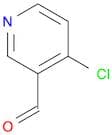
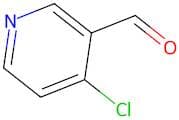
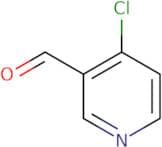
4-Chloropyridine-3-carboxaldehyde is an organic compound characterized by its pyridine ring, which is a six-membered aromatic heterocycle containing one nitrogen atom. The presence of a chlorine atom at the 4-position and an aldehyde functional group at the 3-position significantly influences its chemical properties. This compound typically appears as a colorless to pale yellow liquid or solid, depending on its form and purity. It is soluble in organic solvents such as ethanol and dichloromethane but has limited solubility in water due to the hydrophobic nature of the chlorinated pyridine structure. 4-Chloropyridine-3-carboxaldehyde is often utilized in organic synthesis, particularly in the preparation of various pharmaceuticals and agrochemicals, owing to its reactivity as an electrophile. Additionally, it can participate in various chemical reactions, including nucleophilic additions and condensation reactions, making it a valuable intermediate in synthetic chemistry. Safety precautions should be observed when handling this compound, as it may pose health risks if inhaled or ingested.
Formula:C6H4ClNO
InChI:InChI=1/C6H4ClNO/c7-6-1-2-8-3-5(6)4-9/h1-4H
SMILES:c1cncc(C=O)c1Cl
Synonyms:- 4-Chloro-3-Formylpyridine
- 3-Pyridinecarboxaldehyde,4-chloro-(9CI)
- 4-Chloro-3-Pyridincarboxaldehyde
- 4-Chloronicotinaldehyde
- 4-Chloropyridine-3-Carbaldehyde
Sort by
Purity (%)
0
100
|
0
|
50
|
90
|
95
|
100
Found 4 products.
3-Pyridinecarboxaldehyde, 4-chloro-
CAS:Formula:C6H4ClNOPurity:97%Color and Shape:SolidMolecular weight:141.5551Ref: IN-DA000AH8
1kgTo inquire500gTo inquire250mg25.00€1g29.00€5g58.00€10g80.00€25g128.00€100g358.00€4-Chloronicotinaldehyde
CAS:4-ChloronicotinaldehydeFormula:C6H4ClNOPurity:97%Color and Shape: pale yellow solidMolecular weight:141.56g/mol4-Chloropyridine-3-carboxaldehyde
CAS:4-Chloropyridine-3-carboxaldehyde (4CPCA) is a potent inhibitor of the enzyme, formylation. 4CPCA is synthesized in an experimental method involving reaction of 4-chloropyridine and 3-bromoformaldehyde with a base, followed by hydrolysis to produce the desired product. This compound has been shown to inhibit formylation in vitro with inhibition potentials as high as 5000 μM. The IC 50 value for 4CPCA was found to be 0.6 mM. Formylation activity was inhibited in cell free systems and in cells from rat liver and human erythrocytes. The pharmacokinetic profile of 4CPCA is dose dependent and it is metabolized into inactive compounds by oxidation or conjugation with glucuronic acid.
Formula:C6H4ClNOPurity:Min. 95%Color and Shape:Yellow SolidMolecular weight:141.55 g/molRef: 3D-FC55551
Discontinued product