CAS 1142197-14-5
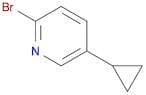
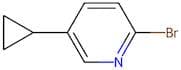
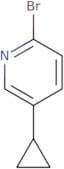
:2-bromo-5-cyclopropylpyridine
Description:
2-Bromo-5-cyclopropylpyridine is a heterocyclic organic compound characterized by a pyridine ring substituted with a bromine atom at the second position and a cyclopropyl group at the fifth position. The presence of the bromine atom introduces notable reactivity, making it a potential candidate for various chemical reactions, including nucleophilic substitutions and coupling reactions. The cyclopropyl group contributes to the compound's unique steric and electronic properties, which can influence its reactivity and interactions with other molecules. This compound is typically a colorless to pale yellow liquid or solid, depending on its physical state at room temperature. It is soluble in organic solvents, which makes it useful in synthetic organic chemistry. Additionally, the presence of the nitrogen atom in the pyridine ring can impart basicity and influence the compound's behavior in biological systems, potentially making it relevant in medicinal chemistry. Overall, 2-bromo-5-cyclopropylpyridine is of interest for its synthetic utility and potential applications in pharmaceuticals and agrochemicals.
Sort by
Purity (%)
0
100
|
0
|
50
|
90
|
95
|
100
Found 4 products.
Pyridine, 2-bromo-5-cyclopropyl-
CAS:Formula:C8H8BrNPurity:97%Color and Shape:LiquidMolecular weight:198.05982-Bromo-5-cyclopropylpyridine
CAS:2-Bromo-5-cyclopropylpyridinePurity:97%Molecular weight:198.06g/mol2-Bromo-5-cyclopropylpyridine
CAS:Formula:C8H8BrNPurity:97%Color and Shape:LiquidMolecular weight:198.0632-Bromo-5-cyclopropylpyridine
CAS:The Suzuki coupling reaction is a chemical reaction that forms new carbon-carbon bonds by the action of an organometallic catalyst and a boron compound. The process is named after the Japanese chemist Akira Suzuki who first reported it in 1979. The reaction has been shown to be successful with a wide variety of boronic acids, including 2-bromo-5-cyclopropylpyridine, which can be obtained from cyclopropylboronic acid. This coupling has been optimized for high yields under mild conditions with organic solvents such as tetrahydrofuran or dichloromethane.Formula:C8H8BrNPurity:Min. 95%Molecular weight:198.06 g/mol