CAS 114627-30-4
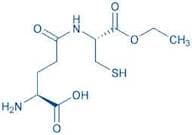
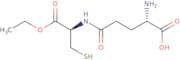
:N-gamma-glutamylcysteine ethyl ester
Description:
N-gamma-glutamylcysteine ethyl ester, with the CAS number 114627-30-4, is a synthetic compound that serves as a derivative of glutathione, a crucial antioxidant in biological systems. This compound features a structure that includes a gamma-glutamyl group linked to a cysteine moiety, with an ethyl ester modification that enhances its lipophilicity and potential bioavailability. It is primarily studied for its role in cellular antioxidant defense and its potential therapeutic applications, particularly in conditions related to oxidative stress. The ethyl ester form may facilitate cellular uptake, making it a subject of interest in pharmacological research. In terms of solubility, it is generally soluble in organic solvents, and its stability can be influenced by pH and temperature. As with many amino acid derivatives, it may exhibit various biological activities, including modulation of cellular signaling pathways. However, further research is necessary to fully elucidate its mechanisms of action and potential applications in medicine and biochemistry.
Formula:C10H18N2O5S
InChI:InChI=1/C10H18N2O5S/c1-2-17-10(16)7(5-18)12-8(13)4-3-6(11)9(14)15/h6-7,18H,2-5,11H2,1H3,(H,12,13)(H,14,15)
SMILES:CCOC(=O)C(CS)N=C(CCC(C(=O)O)N)O
Synonyms:- Glu-cys-oet
- N-gamma-L-Glutamyl-L-cysteine ethyl ester
- gamma-Gce
- gamma-Glutamylcysteinylethyl ester
- L-Cysteine, N-L-gamma-glutamyl-, 1-ethyl ester
- ethyl L-gamma-glutamyl-L-cysteinate
- Ethyl Gamma-Glutamylcysteinate
- N-gamma-Glutamylcysteine ethyl ester
Sort by
Purity (%)
0
100
|
0
|
50
|
90
|
95
|
100
Found 2 products.
(Des-Gly)-Glutathione-monoethyl ester (reduced)
CAS:γ-GCE has been shown to be much more easily transported into isolated rat hepatocytes than glutathione. Within the cells it could be converted into reduced glutathione. Therefore it could – better than glutathione – prevent immunological cell injury in isolated rat hepatocytes treated with anti-rat liver plasma membrane rabbit antiserum. γ-GCE may help to reduce oxidative stress in various biological systems by promoting the biosynthesis of glutathion. For this reason, administration of GCEE and N-acetyl-cysteine (NAC) was discussed as a potential therapeutic approach for Alzheimer disease.Formula:C10H18N2O5SPurity:> 87%Color and Shape:White PowderMolecular weight:278.33(Des-Gly)-Glutathione-monoethyl ester (reduced)
CAS:Glutathione (GSH) is a tripeptide that is synthesized in the liver by the enzyme glutathione synthetase and plays an important role in protecting cells from oxidative damage. The reduced form of glutathione is produced by the enzyme glutathione reductase, which reduces oxidized glutathione using NADPH as a cofactor. Glutathione monoethyl ester (GME) is a reversible covalent inhibitor of aminotransferases that has been shown to have hepatoprotective effects in animal models and clinical use. GME reversibly binds to the active site of aminotransferases, preventing their catalytic activity. It also has been shown to inhibit mitochondrial membrane potential and reactive oxygen species production, leading to an increase in cellular energy metabolism. Glutathione monoethyl ester (GME) was initially developed as a means of increasing blood levels of reduced glutathione and of interfering withFormula:C10H18N2O5SPurity:Min. 95%Molecular weight:278.33 g/mol