CAS 115-80-0
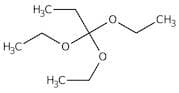
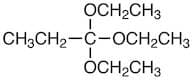
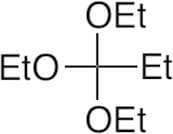
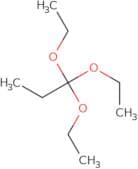
:Triethyl orthopropionate
Description:
Triethyl orthopropionate, with the CAS number 115-80-0, is an organic compound classified as an ester. It is characterized by its clear, colorless liquid form and a fruity odor, which is typical of many esters. The molecular formula of triethyl orthopropionate is C11H22O4, indicating that it contains three ethyl groups and one propionate group. This compound is soluble in organic solvents such as ethanol and ether but has limited solubility in water. Triethyl orthopropionate is primarily used as a reagent in organic synthesis and as a solvent in various chemical processes. It can also serve as a flavoring agent in the food industry due to its pleasant aroma. Additionally, it is utilized in the production of certain polymers and as an intermediate in the synthesis of pharmaceuticals. Safety precautions should be observed when handling this compound, as it may cause irritation to the skin and eyes, and proper ventilation is recommended to avoid inhalation of vapors.
Formula:C9H20O3
InChI:InChI=1/C9H20O3/c1-5-9(10-6-2,11-7-3)12-8-4/h5-8H2,1-4H3
InChI key:InChIKey=FGWYWKIOMUZSQF-UHFFFAOYSA-N
SMILES:C(OCC)(OCC)(OCC)CC
Synonyms:- 1,1,1-Triethoxypropane
- Ethyl orthopropionate
- NSC 5604
- Orthopropionic acid triethyl ester
- Propane, 1,1,1-triethoxy-
- Teop
- Triethyl orthopropanoate
- Triethyl orthopropionate
- Orthopropionic acid ethyl
- 1,1,1-triethoxy-propan
- Orthopropionic acid ethyl ester
- O-PROPIONIC ACID TRIETHYL ESTER
- triethjyl orthopropionate
- TRIETHYL ORTHOPROPRIONATE
- Triethyl orthopropionate, 98+%
- TRIETHYL-O-PROPIONATE
- Triethylorthopropionat
- Triethyl-O-propionic acid
- Triethyl orthopiopionate
- See more synonyms
Sort by
Purity (%)
0
100
|
0
|
50
|
90
|
95
|
100
Found 7 products.
Triethyl orthopropionate, 97%
CAS:Used as intermediates in pharmaceutical chemical and organic synthesize. It can react with N-benzoyl-glycine in the presence of 4-(dimethylamino)pyridine and acetic anhydride to produce 4-(1-ethoxy-propylidene)-2-phenyl-4H-oxazol-5-one. It is also applied as a starting material in the synthesis ofFormula:C9H20O3Purity:97%Color and Shape:Clear colorless, LiquidMolecular weight:176.26Triethyl Orthopropionate
CAS:Triethyl OrthopropionateFormula:C9H20O3Purity:>96.0%Molecular weight:176.26Triethyl Orthopropionate
CAS:Formula:C9H20O3Purity:>96.0%(GC)Color and Shape:Colorless to Almost colorless clear liquidMolecular weight:176.26Triethyl Orthopropionate (Technical Grade)
CAS:Controlled ProductStability Moisture Sensitive
Applications Triethyl orthopropionate is used as a starting material in the synthesis of Triethyl orthoacrylate. Triethyl orthopropionate is also commonly used in Claisen rearrangement reactions that yield γ,δ-unsaturated esters.
Not a dangerous good if item is equal to or less than 1g/ml and there is less than 100g/ml in the package
References Ghosh, A. & Moon, D.: Org. Lett., 9, 2425 (2007); Ito, H. & Taguchi, T.: Tetrahedron Lett., 38, 5829 (1997); Sarkar, D., et al.: Tetrahedron Lett., 50, 1431 (2009)Formula:C9H20O3Color and Shape:NeatMolecular weight:176.251,1,1-Triethoxypropane
CAS:Formula:C9H20O3Purity:95.0%Color and Shape:Liquid, ClearMolecular weight:176.256Triethyl orthopropionate
CAS:Triethyl orthopropionate is a triester derived from propionic acid and ethanol. It has been shown to have receptor activity in the toll-like receptor family, which are molecules that bind to specific molecules on the surface of cells and activate an immune response. Triethyl orthopropionate also inhibits fatty acid synthesis by binding to the pyrazole ring of the enzyme acetyl-CoA carboxylase, thereby inhibiting its activity. This inhibition leads to higher levels of free fatty acids in the bloodstream, which can lead to metabolic disorders such as diabetes mellitus and autoimmune diseases like lupus erythematosus. The molecule also has a hydroxyl group that can form hydrogen bonds with other molecules, such as methanol solvent or dinucleotide phosphate. These interactions can be used in synthesis methods involving intramolecular hydrogen transfer reactions.Formula:C9H20O3Purity:Min. 95%Color and Shape:Clear LiquidMolecular weight:176.25 g/mol