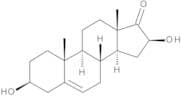
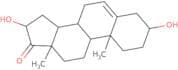
CAS 1159-68-8
:(3beta,16beta)-3,16-dihydroxyandrost-5-en-17-one
Description:
The chemical substance known as (3beta,16beta)-3,16-dihydroxyandrost-5-en-17-one, with the CAS number 1159-68-8, is a steroid compound that belongs to the class of androgens. It features two hydroxyl (-OH) functional groups located at the 3 and 16 positions of the steroid backbone, which contributes to its biological activity. The presence of a double bond between the 5 and 6 positions of the steroid structure is characteristic of androstene derivatives. This compound is often studied for its potential effects on hormonal activity and its role in various biochemical pathways. It may exhibit properties related to anabolic activity, influencing muscle growth and development. Additionally, its structural modifications can affect its solubility, stability, and interaction with biological receptors. As a steroid, it is also relevant in the context of pharmacology and endocrinology, where it may be investigated for therapeutic applications or as a precursor in the synthesis of other steroidal compounds.
Formula:C19H28O3
InChI:InChI=1/C19H28O3/c1-18-7-5-12(20)9-11(18)3-4-13-14(18)6-8-19(2)15(13)10-16(21)17(19)22/h3,12-16,20-21H,4-10H2,1-2H3/t12-,13+,14-,15-,16-,18-,19-/m0/s1
Synonyms:- 3beta,16beta-Dihydroxyandrost-5-en-17-one
- Androst-5-En-17-One, 3,16-Dihydroxy-, (3Beta,16Beta)-
Sort by
Purity (%)
0
100
|
0
|
50
|
90
|
95
|
100
Found 2 products.
16β-Hydroxydehydroepiandrosterone
CAS:Controlled ProductFormula:C19H28O3Color and Shape:NeatMolecular weight:304.4016β-Hydroxy dhea
CAS:Controlled ProductDhea is a steroid hormone that is formed in the adrenal glands and brain. Dhea has been shown to have receptor binding activity in human cells, which may be due to its ability to bind to glucocorticoid receptors. Dhea also binds to mineralocorticoid receptors and has been shown to increase blood pressure. Dhea can be conjugated with glucuronic acid or sulfate, which will affect its distribution in the body. The conjugates are hydrolyzed by esterases or glucuronidases and release dhea into the circulation. The major route of elimination of dhea is through the kidneys where it undergoes glomerular filtration and tubular secretion. In infants, dhea is transferred from maternal milk to the infant's blood stream via diffusion across the mammary gland barrier. Mass spectrometry-based assays have been developed for determining plasma concentrations of dhea, estradiol, and progesterone in humans.Formula:C19H28O3Purity:Min. 95%Molecular weight:304.4 g/mol