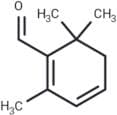
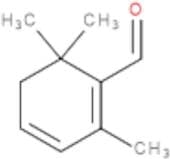
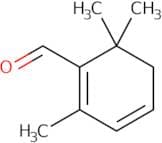
CAS 116-26-7
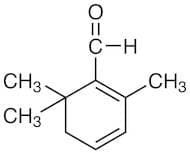
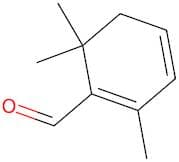
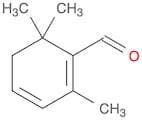
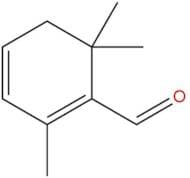
:Safranal
Description:
Safranal is an organic compound primarily known for its role as a flavoring and fragrance agent, derived from saffron, the dried stigma of Crocus sativus. It is characterized by its distinct aroma, often described as sweet and floral, which contributes to its use in perfumes and culinary applications. Safranal has a molecular formula of C13H10O, indicating it contains carbon, hydrogen, and oxygen atoms. The compound is a yellow to orange liquid at room temperature and is soluble in organic solvents but has limited solubility in water. Safranal exhibits antioxidant properties and has been studied for potential therapeutic effects, including anti-inflammatory and neuroprotective activities. Its CAS number, 116-26-7, is a unique identifier that facilitates the identification of this compound in chemical databases. Overall, safranal is valued not only for its sensory attributes but also for its potential health benefits, making it a compound of interest in both the food and pharmaceutical industries.
Formula:C10H14O
InChI:InChI=1S/C10H14O/c1-8-5-4-6-10(2,3)9(8)7-11/h4-5,7H,6H2,1-3H3
InChI key:InChIKey=SGAWOGXMMPSZPB-UHFFFAOYSA-N
SMILES:C(=O)C=1C(C)(C)CC=CC1C
Synonyms:- Safranal
- 2,6,6-Trimethyl-1,3-cyclohexadiene-1-aldehyde
- 2,6,6-Trimethyl-1,3-cyclohexadiene-1-carboxaldehyde
- 1,3-Cyclohexadiene-1-carboxaldehyde, 2,6,6-trimethyl-
- 2,2,6-Trimethyl-4,6-cyclohexadien-1-aldehyde
Sort by
Purity (%)
0
100
|
0
|
50
|
90
|
95
|
100
Found 13 products.
Safranal
CAS:Formula:C10H14OPurity:>95.0%(GC)Color and Shape:Light yellow to Yellow to Green clear liquidMolecular weight:150.222,6,6-Trimethyl-1,3-Cyclohexadiene-1-Carboxaldehyde
CAS:2,6,6-Trimethyl-1,3-Cyclohexadiene-1-CarboxaldehydeFormula:C10H14OPurity:90%Color and Shape:Liquid-ClearMolecular weight:150.221,3-CYCLOHEXADIENE-1-CARBOXALDEHYDE, 2,6,6-TRIMETHYL-
CAS:Formula:C10H14OPurity:96%Color and Shape:LiquidMolecular weight:150.2176Smart Solutions™ TerpiMix Kit 2500 μg/mL in Isopropanol
CAS:Controlled Product- 10458-14-7
- 105-87-3
- 106-22-9
- 106-24-1
- 106-25-2
- 111-02-4
- 112-14-1
- 1139-30-6
- 116-26-7
- 1196-01-6
- 123-35-3
- 124-76-5
- 125-12-2
- 127-91-3
- 13466-78-9
- 138-86-3
- 13877-91-3
- 2217-02-9
- 2244-16-8
- 22567-21-1
- 3387-41-5
- 4602-84-0
- 4630-07-3
- 464-43-7
- 464-45-9
- 4674-50-4
- 469-61-4
- 4695-62-9
- 470-82-6
- 489-86-1
- 498-15-7
- 499-75-2
- 502-61-4
- 515-69-5
- 527-84-4
- 535-77-3
- 5392-40-5
- 546-79-2
- 546-80-5
- 562-74-3
- 586-62-9
- 638-36-8
- 675-20-7
- 6753-98-6
- 7212-44-4
- 7541-49-3
- 76-22-2
- 77-53-2
- 7787-20-4
- 78-70-6
- 79-92-5
- 80-56-8
- 87-44-5
- 89-78-1
- 89-79-2
- 89-81-6
- 89-82-7
- 89-83-8
- 98-55-5
- 99-83-2
- 99-85-4
- 99-86-5
- 99-87-6
Color and Shape:KitSafranal
CAS:Safranal is the special volatile aroma compound of saffron.Safranal has neuroprotective and anti-inflammatory effects and has the potential for Parkinson’sFormula:C10H14OPurity:96.16% - 96.33%Color and Shape:Yellow Liquid LiquidMolecular weight:150.22Safranal (>80%)
CAS:Controlled ProductStability Light Sensitive
Applications Safranal, is isolated from Saffron, and is primarily responsible for the aroma of saffron. It has also been shown to have anticonvulsant properties, acting as agonist at GABAA receptors. It is also possessing anticancer and antidepressant properties.
References Hosseinzadeh, H., et al.: Acta. Horticulturae, 650, 435 (2004); Hosseinzadeh, H, et al.: Phytomedicine, 14 (4), 256 (2007); Assimopoulou AN., et al.: Phytoherapy Res., 19 (11), 997 (2005);Formula:C10H14OPurity:>80%Color and Shape:NeatMolecular weight:150.22Safranal
CAS:Safranal is a natural product that belongs to the class of phenylpropanoids. It has been shown to have cytotoxic effects in vitro and in vivo. Safranal has been shown to be cytotoxic to k562 cells, human serum, and ischemia–reperfusion injury. Safranal also has demonstrated an inhibitory effect on MDA-MB-231 breast cancer cells. Safranal can be used as a pharmacological agent for the treatment of various diseases or conditions associated with reactive oxygen species (ROS). The antioxidative properties of safranal have been demonstrated by its ability to protect crocin from oxidation.Formula:C10H14OPurity:Min. 95%Color and Shape:Clear LiquidMolecular weight:150.22 g/mol2,6,6-Trimethylcyclohexa-1,3-dienecarbaldehyde
CAS:Formula:C10H14OPurity:90%Color and Shape:No data available.Molecular weight:150.221