CAS 116786-35-7
:Buccalin
Description:
Buccalin, with the CAS number 116786-35-7, is a chemical compound that has garnered interest in various fields, particularly in pharmacology and biochemistry. It is characterized by its specific molecular structure, which contributes to its biological activity. Buccalin is known for its potential role in modulating physiological processes, possibly influencing neurotransmitter systems or immune responses. The compound may exhibit properties such as solubility in organic solvents and stability under certain conditions, which are essential for its application in research and therapeutic contexts. Additionally, Buccalin's interactions with biological targets can lead to various pharmacological effects, making it a subject of study for its potential therapeutic uses. However, detailed studies on its mechanism of action, efficacy, and safety profile are crucial for understanding its full potential and applications in medicine. As with any chemical substance, proper handling and safety measures should be observed when working with Buccalin in laboratory settings.
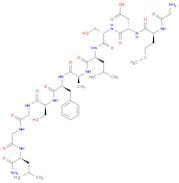
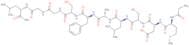
Formula:C45H72N12O15S
Synonyms:- H-Gly-Met-Asp-Ser-Leu-Ala-Phe-Ser-Gly-Gly-Leu-Nh2
- Gly-Met-Asp-Ser-Leu-Ala-Phe-Ser-Gly-Gly-Leu-Nh2
- Gmdslafsggl-Nh2
Sort by
Purity (%)
0
100
|
0
|
50
|
90
|
95
|
100
Found 2 products.
L-Leucinamide, glycyl-L-methionyl-L-α-aspartyl-L-seryl-L-leucyl-L-alanyl-L-phenylalanyl-L-serylglycylglycyl-
CAS:Formula:C45H72N12O15SMolecular weight:1053.1896Buccalin trifluoroacetate salt
CAS:Buccalin is a cholinergic pharmaceutical drug that has been shown to have metabolic, growth factor, and chemotactic activities. It has been used in the treatment of various autoimmune diseases and infectious diseases. The mechanism of action for buccalin is unknown. Buccalin has been shown to have receptor activity in a variety of diagnostic agents such as monoclonal antibodies and fatty acids. It binds to acetylcholine receptors at the neuromuscular junction, leading to activation of muscle fibers by acetylcholine release from nerve endings.Formula:C45H72N12O15SPurity:Min. 95%Molecular weight:1,053.19 g/molRef: 3D-FB110404
Discontinued product