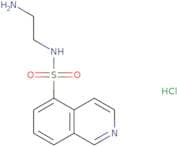
CAS 116970-50-4
:5-Isoquinolinesulfonamide, N-(2-aminoethyl)-, hydrochloride (1:1)
Description:
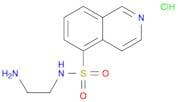
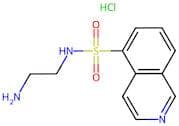
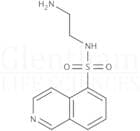
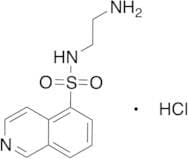
5-Isoquinolinesulfonamide, N-(2-aminoethyl)-, hydrochloride (1:1) is a chemical compound characterized by its isoquinoline structure, which is a bicyclic aromatic compound. This substance features a sulfonamide functional group, contributing to its potential biological activity, particularly in medicinal chemistry. The presence of the aminoethyl side chain enhances its solubility and reactivity, making it suitable for various applications, including as a pharmacological agent. The hydrochloride form indicates that the compound is a salt, which typically improves stability and solubility in aqueous solutions. This compound may exhibit properties such as inhibition of specific enzymes or receptors, making it of interest in drug development, particularly in the context of treating diseases related to the central nervous system or cancer. As with many sulfonamides, it may also possess antibacterial properties. Safety and handling precautions are essential due to potential toxicity, and its use should be guided by appropriate regulatory standards.
Formula:C11H13N3O2S·ClH
InChI:InChI=1S/C11H13N3O2S.ClH/c12-5-7-14-17(15,16)11-3-1-2-9-8-13-6-4-10(9)11;/h1-4,6,8,14H,5,7,12H2;1H
InChI key:InChIKey=ZAMCOVXWUOADQX-UHFFFAOYSA-N
SMILES:S(NCCN)(=O)(=O)C=1C2=C(C=CC1)C=NC=C2.Cl
Synonyms:- 5-Isoquinolinesulfonamide, N-(2-aminoethyl)-, hydrochloride (1:1)
- 5-Isoquinolinesulfonamide, N-(2-aminoethyl)-, monohydrochloride
- N-(2-Aminoethyl)-5-Isoquinolinesulfonamide Hydrochloride
- N-(2-Aminoethyl)-5-Isoquinolinesulfonamidemonohydrochloride
- N-(2-Aminoethyl)-5-Isoquinolinesulfonamidmonohydrochloride
- N-(2-Aminoethyl)-5-isoquinolinesulfonamide, Dihydrochloride Discontinued See: A609001
- N-(2-Aminoethyl)-Isochinoline-5-Sulfonamide Hydrochloride
- N-(2-Aminoethyl)Isoquinoline-5-Sulfonamide Hydrochloride
- N-(2-Aminoethyl)Isoquinoline-5-Sulfonamide Hydrochloride (H9)
Sort by
Purity (%)
0
100
|
0
|
50
|
90
|
95
|
100
Found 6 products.
N-(2-Aminoethyl)isoquinoline-5-sulfonamide hydrochloride
CAS:N-(2-Aminoethyl)isoquinoline-5-sulfonamide hydrochloridePurity:97%Molecular weight:287.77g/molN-(2-Aminoethyl)isoquinoline-5-sulfonamide hydrochloride
CAS:Formula:C11H14ClN3O2SPurity:97%Molecular weight:287.76N-(2-Aminoethyl)-5-isoquinolinesulfonamide Hydrochloride
CAS:Controlled Product<p>Applications A potent competitive inhibitor of protein kinase C, cGMP-, and cAMP-dependent protein kinase with respect to ATP.<br>References Hidaka, H., et al.: J. Biol. Chem., 260, 5, 2922 (1985),<br></p>Formula:C11H13N3O2S·ClHColor and Shape:NeatMolecular weight:287.77H-9 hydrochloride
CAS:<p>H-9 hydrochloride is a selective protein kinase inhibitor, which is synthetically derived. It primarily inhibits cyclic nucleotide-dependent protein kinases, including protein kinase A (PKA) and protein kinase G (PKG), along with myosin light chain kinase (MLCK). The mode of action involves competitive inhibition at the ATP binding site of these kinases, thereby impacting phosphorylation pathways crucial for multiple physiological functions. The selective inhibition by H-9 hydrochloride allows for detailed exploration of kinase-mediated signaling pathways in cellular biology. Moreover, it is extensively utilized in studies involving cell motility, smooth muscle contraction, and signal transduction. The relevance of H-9 hydrochloride in academic research lies in its ability to provide insights into kinase activity modulation and its ensuing effects on cellular dynamics. This compound serves as an invaluable tool for scientists aiming to elucidate the complex role of protein kinases in health and disease, enabling the development of innovative therapeutic strategies.</p>Formula:C11H14ClN3O2SPurity:Min. 95%Color and Shape:White To Off-White SolidMolecular weight:287.77 g/mol