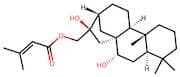
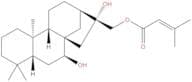
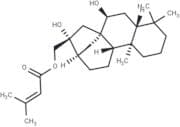
CAS 1169805-98-4
:Kaurane-7,16,17-triol,17-(3-methyl-2-butenoate), (7b)-
Description:
Kaurane-7,16,17-triol, 17-(3-methyl-2-butenoate), also known by its CAS number 1169805-98-4, is a chemical compound belonging to the class of kaurane diterpenoids, which are derived from the kaurene skeleton. This compound features multiple hydroxyl groups, indicating its potential for hydrogen bonding and solubility in polar solvents. The presence of the 3-methyl-2-butenoate moiety suggests that it may exhibit unique reactivity and properties associated with ester functionalities. Kaurane derivatives are often studied for their biological activities, including potential anti-inflammatory and anti-cancer properties. The structural complexity of this compound, characterized by its specific stereochemistry and functional groups, may influence its interactions with biological targets. As with many natural products, the synthesis and extraction of kaurane derivatives can be challenging, making their study significant in both synthetic and medicinal chemistry. Further research may elucidate its pharmacological potential and applications in various fields, including pharmaceuticals and agrochemicals.
Formula:C25H40O4
Synonyms:- SculponeatinN
Sort by
Purity (%)
0
100
|
0
|
50
|
90
|
95
|
100
Found 5 products.
Sculponeatin N
CAS:Sculponeatin N may have protective effects on the lipid peroxidation-damaged live cells.Formula:C25H40O4Purity:97.00%Color and Shape:SolidMolecular weight:404.58Sculponeatin N
CAS:Sculponeatin N is a hypothetical biochemical compound, which is theorized to be synthesized from marine microorganisms. The source of this compound is potentially derived through a biosynthetic process involving unique metabolic pathways present in specific oceanic bacteria. The mode of action of Sculponeatin N is proposed to involve the inhibition of specific enzymatic activities, disrupting targeted metabolic cycles by interfering with enzyme-substrate interactions at a molecular level.
Formula:C25H40O4Purity:Min. 95%Molecular weight:404.6 g/molRef: 3D-UWB80598
Discontinued product