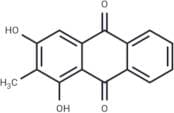
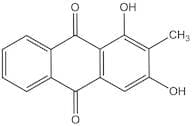
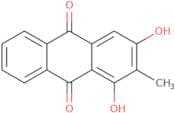
CAS 117-02-2
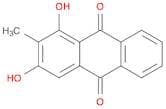
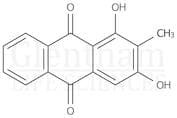
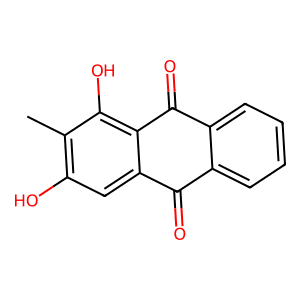
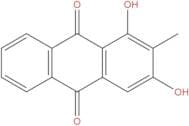
:1,3-dihydroxy-2-methylanthraquinone
- 1,3-Dihydroxy-2-Methylanthracene-9,10-Dione
- 1,3-Dihydroxy-2-methyl-9,10-anthracenedione
- 1,3-Dihydroxy-2-methyl-9,10-anthraquinone
- 9,10-Anthracenedione, 1,3-dihydroxy-2-methyl-
- Anthraquinone, 1,3-dihydroxy-2-methyl-
- Rubiadin
- Rubiadine
- C.I. 75350
- 1,3-DIHYDROXY-2-METHYLANTHRAQUINONE
- 1,3-DIHYDROXY-2-METHYLANTHRAQUINONE USP/EP/BP
- 2-Methylxanthopurpurin
- 2-Methylpurpuroxanthin
- See more synonyms
9,10-Anthracenedione, 1,3-dihydroxy-2-methyl-
CAS:Formula:C15H10O4Purity:98%Color and Shape:SolidMolecular weight:254.2375Rubiadin
CAS:Rubiadin (1,3-Dihydroxy-2-Methylanthracene-9,10-Dione) possesses potent antioxidant property, it can prevent lipid peroxidation induced by FeSO4 and t-Formula:C15H10O4Purity:99.1% - 99.41%Color and Shape:SolidMolecular weight:254.24Rubiadin
CAS:QuinoneFormula:C15H10O4Purity:≥ 95.0 % (HPLC)Color and Shape:PowderMolecular weight:254.24Rubiadin
CAS:Rubiadin is a natural anthraquinone glycoside derived from the plant Rubia tinctorum. It has been shown to have antioxidant and anti-inflammatory effects in vitro and in vivo. Rubiadin also inhibits mitochondrial cytochrome C oxidase activity, leading to a decreased mitochondrial membrane potential and increased intracellular calcium concentration. In addition, it has synergistic effects with other drugs such as rubiadin, which may be due to its ability to inhibit glutamate pyruvate transaminase. The inhibition of this enzyme leads to an increase in the production of ammonia, which can bind with hydrogen ions and form hydrogen gas. This intramolecular reaction may contribute to the antitumor effect observed in colorectal adenocarcinoma cells.
Formula:C15H10O4Purity:Min. 95%Color and Shape:PowderMolecular weight:254.24 g/molRef: 3D-AAA11702
Discontinued product