CAS 117087-45-3
:Pyridine, 2-chloro-3-hydrazino- (9CI)
Description:
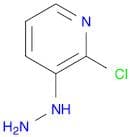
Pyridine, 2-chloro-3-hydrazino- (9CI), with the CAS number 117087-45-3, is an organic compound that features a pyridine ring substituted with both a chlorine atom and a hydrazino group. This compound is characterized by its heterocyclic structure, which includes a six-membered aromatic ring containing one nitrogen atom. The presence of the chlorine atom introduces electrophilic properties, while the hydrazino group can participate in various chemical reactions, including those typical of hydrazines, such as condensation and oxidation reactions. Pyridine derivatives are often utilized in the synthesis of pharmaceuticals, agrochemicals, and other fine chemicals due to their ability to act as ligands and intermediates in organic reactions. The compound may exhibit moderate to low solubility in water, depending on the specific conditions, and is likely to be more soluble in organic solvents. Safety data should be consulted for handling and storage, as halogenated compounds can pose health risks. Overall, this compound's unique functional groups make it a valuable entity in synthetic organic chemistry.
Formula:C5H6ClN3
Sort by
Purity (%)
0
100
|
0
|
50
|
90
|
95
|
100
Found 4 products.
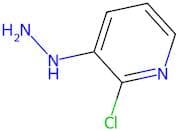
2-Chloro-3-hydrazinylpyridine
CAS:2-Chloro-3-hydrazinylpyridinePurity:95%Molecular weight:143.58g/mol1-(2-Chloropyridine-3-yl)hydrazine hydrochloride
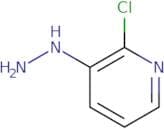
CAS:Formula:C5H7Cl2N3Purity:99.0%Color and Shape:SolidMolecular weight:180.031-(2-Chloropyridine-3-yl)hydrazine hydrochloride
CAS:1-(2-Chloropyridine-3-yl)hydrazine hydrochloride is a white crystalline solid that is soluble in water and ethanol. It has the chemical formula C6H5NClNHNH2. This compound is an isothiocyanate that reacts with acetal, hydrazine, thiazolidone, diethyl, hydrochloric acid, dimethyl or dicarboxylate to form a cyclized product. This product can be used as a herbicide by reacting with the phenyl group of acetaldehyde to form a phenoxyacetal. It also reacts with nitrous acid to form an aziridinium ion intermediate that reacts with ethoxycarbonylmethyl to form ethoxycarbonylmethylthioisothiocyanate.Formula:C5H7Cl2N3Purity:Min. 95%Molecular weight:180.03 g/mol