CAS 117122-84-6
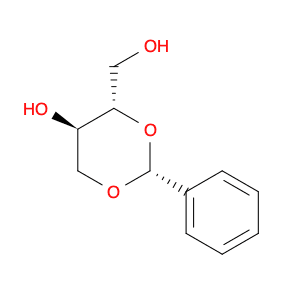
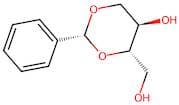
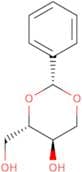
:1,3-Dioxane-4-methanol, 5-hydroxy-2-phenyl-, (2R,4S,5R)-
Description:
1,3-Dioxane-4-methanol, 5-hydroxy-2-phenyl-, (2R,4S,5R)-, with CAS number 117122-84-6, is a chemical compound characterized by its unique bicyclic structure that includes a dioxane ring and a phenolic group. This compound features multiple functional groups, including a hydroxymethyl group and a hydroxyl group, which contribute to its reactivity and potential applications in organic synthesis. The stereochemistry indicated by the (2R,4S,5R) configuration suggests specific spatial arrangements of its substituents, which can influence its biological activity and interaction with other molecules. Typically, compounds of this nature may exhibit solubility in polar solvents due to the presence of hydroxyl groups, and they may participate in hydrogen bonding. Additionally, the phenyl group can impart aromatic characteristics, potentially affecting the compound's stability and reactivity. Overall, this compound may be of interest in medicinal chemistry and materials science due to its structural features and functional versatility.
Formula:C11H14O4
Sort by
Purity (%)
0
100
|
0
|
50
|
90
|
95
|
100
Found 4 products.
1,3-Dioxane-4-methanol, 5-hydroxy-2-phenyl-, (2R,4S,5R)-
CAS:Formula:C11H14O4Purity:95%Color and Shape:SolidMolecular weight:210.226461,3-O-Benzylidene-L-erythritol
CAS:1,3-O-Benzylidene-L-erythritolFormula:C11H14O4Purity:By hplc: 97.92% (Typical Value in Batch COA)Color and Shape: colourless solidMolecular weight:210.23g/mol1,3-O-Benzylidene-L-erythritol
CAS:1,3-O-Benzylidene-L-erythritol is a potent inhibitor of the intestinal maltase. It has two diastereomers, one of which is more potent than the other. The more potent diastereomer inhibits both the maltase and L-arabinose isomerase enzymes in the intestine. This inhibition prevents digestion of complex carbohydrates such as starch and sucrose into simple sugars that can be absorbed by the body. 1,3-O-Benzylidene-L-erythritol also inhibits salacinol synthase and thiosugar synthetases from bacteria and plants, preventing synthesis of these important compounds.
Purity:Min. 95%