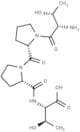
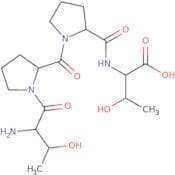
CAS 117928-93-5
:L-Threonine, L-threonyl-L-prolyl-L-prolyl-
Description:
L-Threonine, L-threonyl-L-prolyl-L-prolyl- is a peptide compound that consists of the amino acids threonine and proline. It is characterized by its specific sequence of amino acids, which influences its structural and functional properties. Threonine is an essential amino acid, meaning it must be obtained through the diet, and plays a crucial role in protein synthesis, immune function, and the production of other biomolecules. Proline, on the other hand, is a non-essential amino acid that contributes to the stability and structure of proteins, particularly in collagen. The presence of multiple proline residues in this peptide may impart unique conformational characteristics, potentially affecting its biological activity and interactions with other molecules. This compound may be of interest in various fields, including biochemistry and pharmacology, due to its potential roles in metabolic processes and as a building block for larger peptides or proteins. However, specific applications and biological effects would require further investigation and context.
Formula:C18H30N4O7
Sort by
Purity (%)
0
100
|
0
|
50
|
90
|
95
|
100
Found 2 products.
NT 13
CAS:NT 13 is a partial N-methyl-D-aspartate receptor (NMDAR) agonist used in the study of depression, anxiety, and other related diseases.
Formula:C18H30N4O7Purity:98%Color and Shape:SolidMolecular weight:414.45NT 13
CAS:NT13 is a drug that is being developed for the treatment of hepatitis C. It has been shown to inhibit viral replication and may be able to stabilize the virus. NT13 is an analog of the nucleoside analog, ribavirin, and it inhibits viral RNA synthesis by binding to the RNA polymerase enzyme in the virus's ribonucleoprotein complex. NT13 also has antibacterial activity against Gram-positive bacteria such as Staphylococcus aureus and Streptococcus pyogenes. It binds to bacterial 16S ribosomal RNA and inhibits protein synthesis, leading to cell death by inhibiting the production of proteins vital for cell division. NT13 also has anti-inflammatory properties, which may be due to its inhibition of prostaglandin synthesis.Formula:C18H30N4O7Purity:Min. 95%Molecular weight:414.5 g/mol