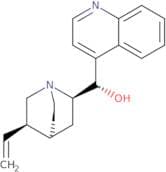
CAS 118-10-5
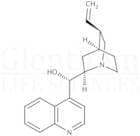
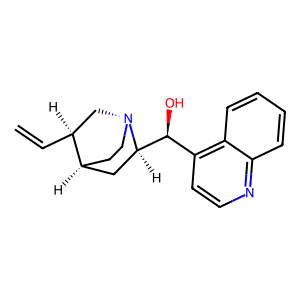
:Cinchonine
- (3alpha,9R)-cinchonan-9-ol
- (3alpha,9S)-cinchonan-9-ol
- (4beta,9S)-cinchonan-1-ium-9-ol
- (8R,9S)-Cinchonine
- (8alpha,9S)-cinchonan-9-ol
- (9R)-cinchonan-9-ol
- (9S)-9-hydroxycinchonan-1-ium
- (9S)-cinchonan-9-ol
- Alpha-(5-Vinyl-2-Quinuclidinyl)-4-Quinolinemethanol
- Cinchonan-9-Ol
- Cinchonan-9-ol, (9S)-
- Cinchonin
- Cinconina
- Nsc 6176
- d-Cinchonine
- Cinchonine
- See more synonyms
Cinchonine
CAS:Formula:C19H22N2OPurity:>98.0%(T)Color and Shape:White to Almost white powder to crystalMolecular weight:294.40(+)-Cinchonine, 98+%, cont. up to 3% quinidine/dihydroquinidine and 3% quinine/dihydroquinine
CAS:This Thermo Scientific Chemicals brand product was originally part of the Alfa Aesar product portfolio. Some documentation and label information may refer to the legacy brand. The original Alfa Aesar product / item code or SKU reference has not changed as a part of the brand transition to Thermo SciFormula:C19H22N2OPurity:98+%Color and Shape:White to pale cream, Crystals or powder or crystalline powderMolecular weight:294.40(S)-Quinolin-4-yl((1S,2R,4S,5S)-5-vinylquinuclidin-2-yl)methanol
CAS:Formula:C19H22N2OPurity:85%Color and Shape:SolidMolecular weight:294.3908Cinchonine
CAS:Cinchonine (LA40221), a potent amide local anesthetic for surface use, is toxic and limited to spinal anesthesia.Formula:C19H22N2OPurity:99.45%Color and Shape:White Or Almost White Solid PowderMolecular weight:294.39(5-Ethenyl-1-azabicyclo[2.2.2]oct-2-yl)(quinolin-4-yl)methanol
CAS:(5-Ethenyl-1-azabicyclo[2.2.2]oct-2-yl)(quinolin-4-yl)methanolPurity:≥95%Color and Shape:White SolidMolecular weight:294.39g/molCinchonine
CAS:Formula:C19H22N2OPurity:(Titration) ≥ 99.0%Color and Shape:White to almost white crystalline powderMolecular weight:294.39(+)-cinchonine
CAS:Cinchona alkaloidFormula:C19H22N2OPurity:≥ 95.0 % (HPLC)Color and Shape:PowderMolecular weight:294.4Cinchonine
CAS:Stability Light Sensitive
Applications Stereomeric with Cinchonidine (C441925). Antimalarial.
References Litchfield, J., et al.: J. Pharm. Exp. Ther., 96, 99 (1949), Trager, W., et al.: Science, 193, 673 (1976), Panisko, D., et al.: Drugs, 39, 160 (1990), Karle, J., et al.: Antimicrob. Agents Chemother., 36, 1538 (1992),Formula:C19H22N2OColor and Shape:NeatMolecular weight:294.39(+)-Cinchonine
CAS:Formula:C19H22N2OPurity:85%Color and Shape:Solid, Crystalline Powder or PowderMolecular weight:294.398Cinchonine
CAS:Cinchonine is a naturally occurring alkaloid, which is derived from the bark of the Cinchona tree. This compound is known for its antimalarial properties, functioning primarily through the inhibition of the heme polymerase enzyme in Plasmodium parasites. By interfering with the conversion of toxic heme into the non-toxic hemozoin, cinchonine effectively causes an accumulation of toxic heme within the parasite, ultimately leading to its death.
Formula:C19H22N2OPurity:Min. 95%Molecular weight:294.39 g/mol


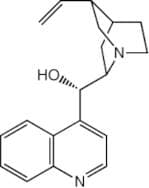

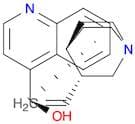


![(5-Ethenyl-1-azabicyclo[2.2.2]oct-2-yl)(quinolin-4-yl)methanol](/_next/image/?url=https%3A%2Fstatic.cymitquimica.com%2Fproducts%2F54%2Fthumb%2FOR28810.jpg&w=3840&q=75)