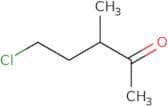
CAS 1187-81-1
:5-Chloro-3-methyl-2-pentanone
Description:
5-Chloro-3-methyl-2-pentanone, with the CAS number 1187-81-1, is an organic compound characterized by its ketone functional group and the presence of a chlorine atom. It has a molecular formula that reflects its structure, which includes a five-carbon chain with a methyl group and a chlorine substituent. This compound is typically a colorless to pale yellow liquid with a distinctive odor. It is soluble in organic solvents and exhibits moderate volatility. The presence of the chlorine atom contributes to its reactivity, making it useful in various chemical syntheses and applications, including as an intermediate in the production of pharmaceuticals and agrochemicals. Additionally, it may undergo typical reactions associated with ketones, such as nucleophilic addition and oxidation. Safety precautions are necessary when handling this compound, as it may pose health risks, including irritation to the skin and respiratory system. Proper storage and disposal methods should be followed to mitigate environmental impact.
Formula:C6H11ClO
InChI:InChI=1S/C6H11ClO/c1-5(3-4-7)6(2)8/h5H,3-4H2,1-2H3
InChI key:InChIKey=XKEZKJHAYZEVNQ-UHFFFAOYSA-N
SMILES:C(CCCl)(C(C)=O)C
Synonyms:- 1-Chloro-3-methylpentan-4-one
- 2-Pentanone, 5-Chloro-3-Methyl-
- 3-Methyl-5-chloro-2-pentanone
- 5-Chloro-3-methyl-2-pentanone
- 5-Chloro-3-methylpentan-2-one
Sort by
Purity (%)
0
100
|
0
|
50
|
90
|
95
|
100
Found 1 products.
5-Chloro-3-methylpentan-2-one
CAS:5-Chloro-3-methylpentan-2-one (5CMP) is an alkaloid that can be found in plants. It has been shown to have bioactive properties, such as being anti-inflammatory and anti-cancer. 5CMP is a precursor to the natural products physovenine and indoline. These compounds are used as targets for drug discovery because of their biological activity. In addition, 5CMP is an intermediate in the synthesis of other biologically active molecules, such as aldehydes and hydrazines. 5CMP is synthesized by dehydration of 2-isopropenyl acetate, which undergoes iminium ion formation and subsequent rearrangement to form the desired product. The reaction yields hydrogen chloride gas, which can be removed by passing through a solution of potassium hydroxide or sodium bicarbonate prior to isolation.Formula:C6H11ClOPurity:Min. 95%Molecular weight:134.6 g/mol