CAS 1189959-13-4
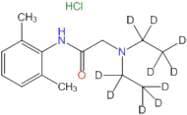
:Lidocaine-d10 HCl(N,N-diethyl-d10)
CAS:Purity:99 atom % DColor and Shape:White SolidMolecular weight:280.86Lidocaine-d10 Hydrochloride
CAS:Controlled ProductStability Hygroscopic
Applications Anesthetic (local); antiarrhythmic (class IB). Long-acting, membrane stabilizing agent against ventricular arrhythmia. Originally developed as a local anesthetic.
Not a dangerous good if item is equal to or less than 1g/ml and there is less than 100g/ml in the package
References Duce, R., et al.: J. Pharmacol. Exp. Ther., 179, 580 (1971), Kronberg, G.H., et al.: J. Med. Chem., 16, 739 (1973), Groningsson, K., et al.: Anal. Profiles Drug Subs., 14, 207 (1985), Davies, P.S., et al.: Drugs, 64, 937 (2004),Formula:C14D10H12N2O·ClHColor and Shape:Off-WhiteMolecular weight:280.86Lidocaine-d10 Hydrochloride (1 mg/mL in Methanol)
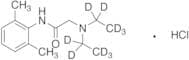
CAS:Controlled ProductFormula:C14D10H12N2O·ClHColor and Shape:Single SolutionMolecular weight:280.86Lidocaine-d10 hydrochloride
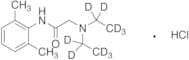
CAS:Lidocaine is a local anesthetic that inhibits the transmission of nerve impulses. Lidocaine-d10 hydrochloride is a drug product that contains lidocaine and deuterium-labeled lidocaine, which has been chemically synthesized to contain deuterium atoms in place of hydrogen atoms. Lidocaine-d10 hydrochloride is used as an analytical standard for pharmacological studies and drug development. It also serves as an impurity standard in the synthesis of other compounds. Lidocaine-d10 hydrochloride is metabolized through oxidation and reduction, forming metabolites such as 4-hydroxylidocaine, 4-dehydroxylidocaine, and 2,6-dehydroxylidocaine.
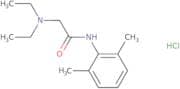
Lidocaine-d10 hydrochloride can be used to study the metabolism of lidocaine and its metabolites, which are important for drug development.Formula:C14H13D10ClN2OPurity:Min. 95%Molecular weight:280.86 g/mol